Rajasthani Blouse Design: Rajputi Poshak, Gota Patti and Rajwadi
- 12 designs
- By saree type
- Updated Oct 2026
A rajasthani blouse design is all about colour, shine and handwork: gota patti, mirrors, zardozi and bright bandhani. These blouses look festive at teej, weddings and family functions. Most are well covered, with elbow or full sleeves, so they suit women of every age.
This page shows 12 ideas across the Rajputi poshak blouse, gota patti work, rajwadi and marwadi styles, and Gujarati Kutch embroidery.
For more tie-dye ideas, see bandhani blouse design. For mirror blouses, visit mirror work blouse design.
Rajputi Poshak Blouse Design
The Rajputi poshak blouse, often called a kanchli or kurti, is fitted, well covered and usually has full or three-quarter sleeves. A rajputi blouse design is cut to sit under the odhni with no gaps.
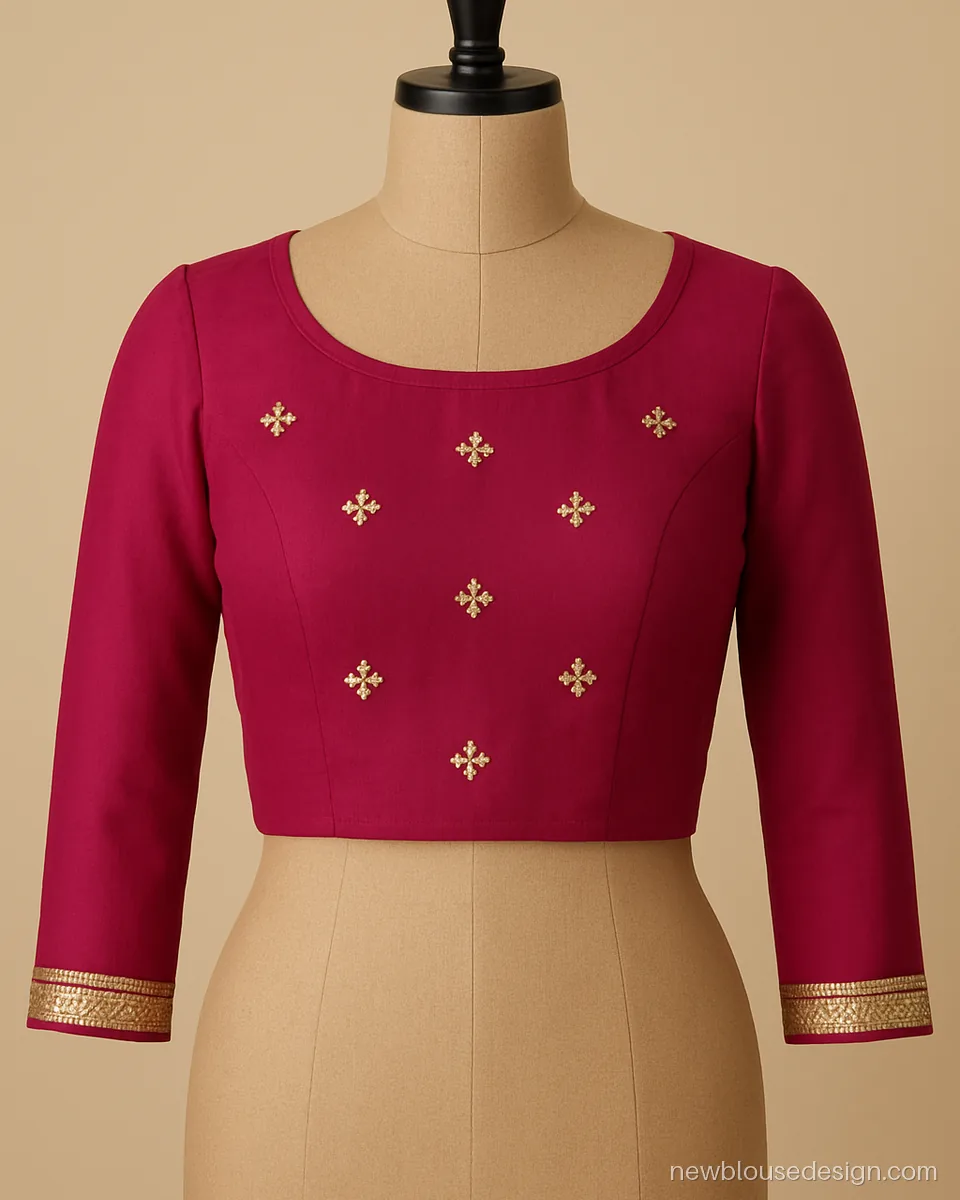
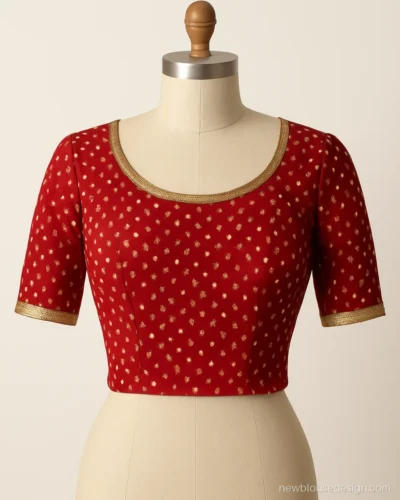
Full sleeves with a gota hem and a modest round neck are true to the poshak style. Wear it with a matching pink odhni and lehenga.
Tailor note: Round front 5 inches, full sleeves with 2 inch gota hem, front hooks, cotton lining.
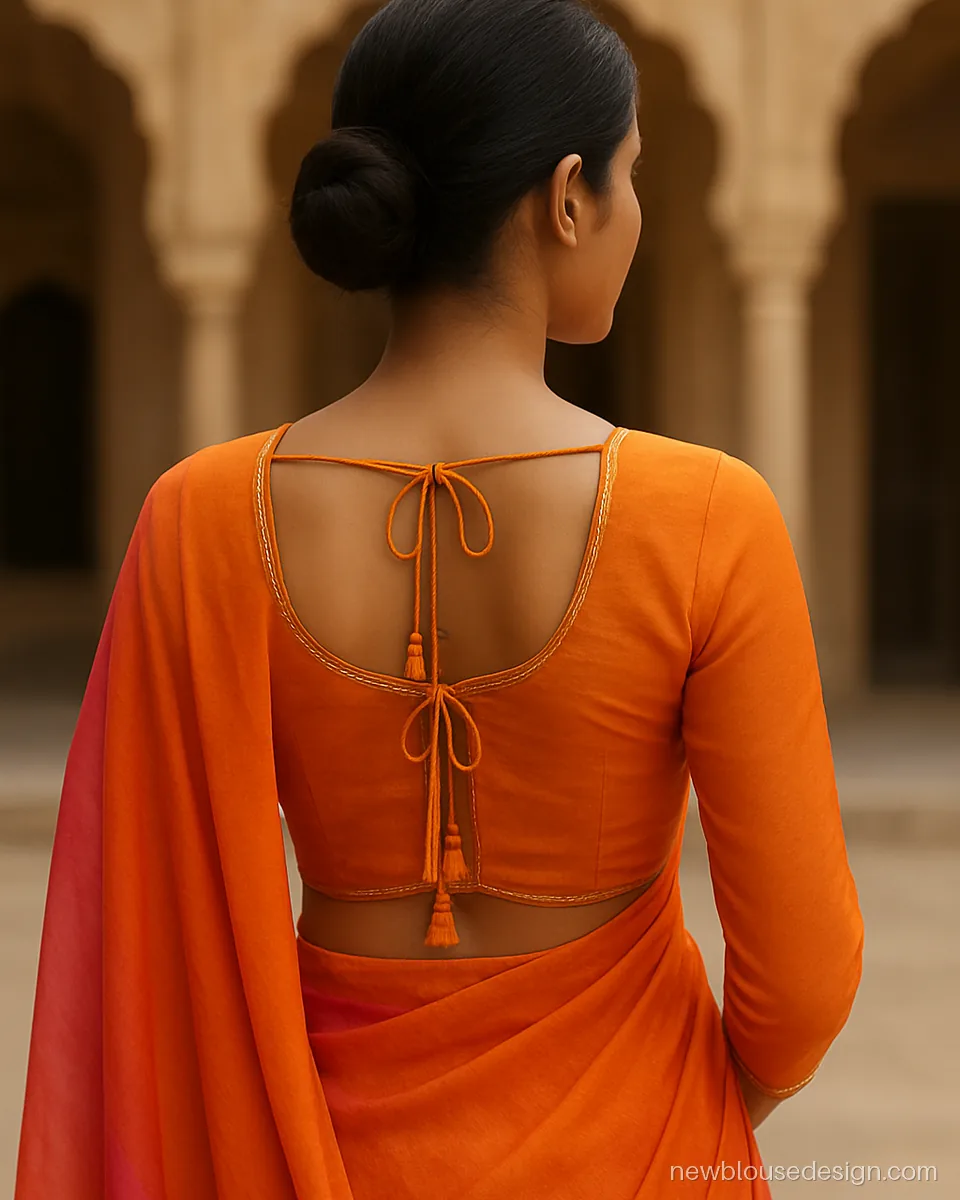
The traditional kanchli back is open with dori ties. Today it is lined and padded for comfort, but the look stays the same.
Tailor note: Kanchli style back with three dori ties, padding, cover with odhni.
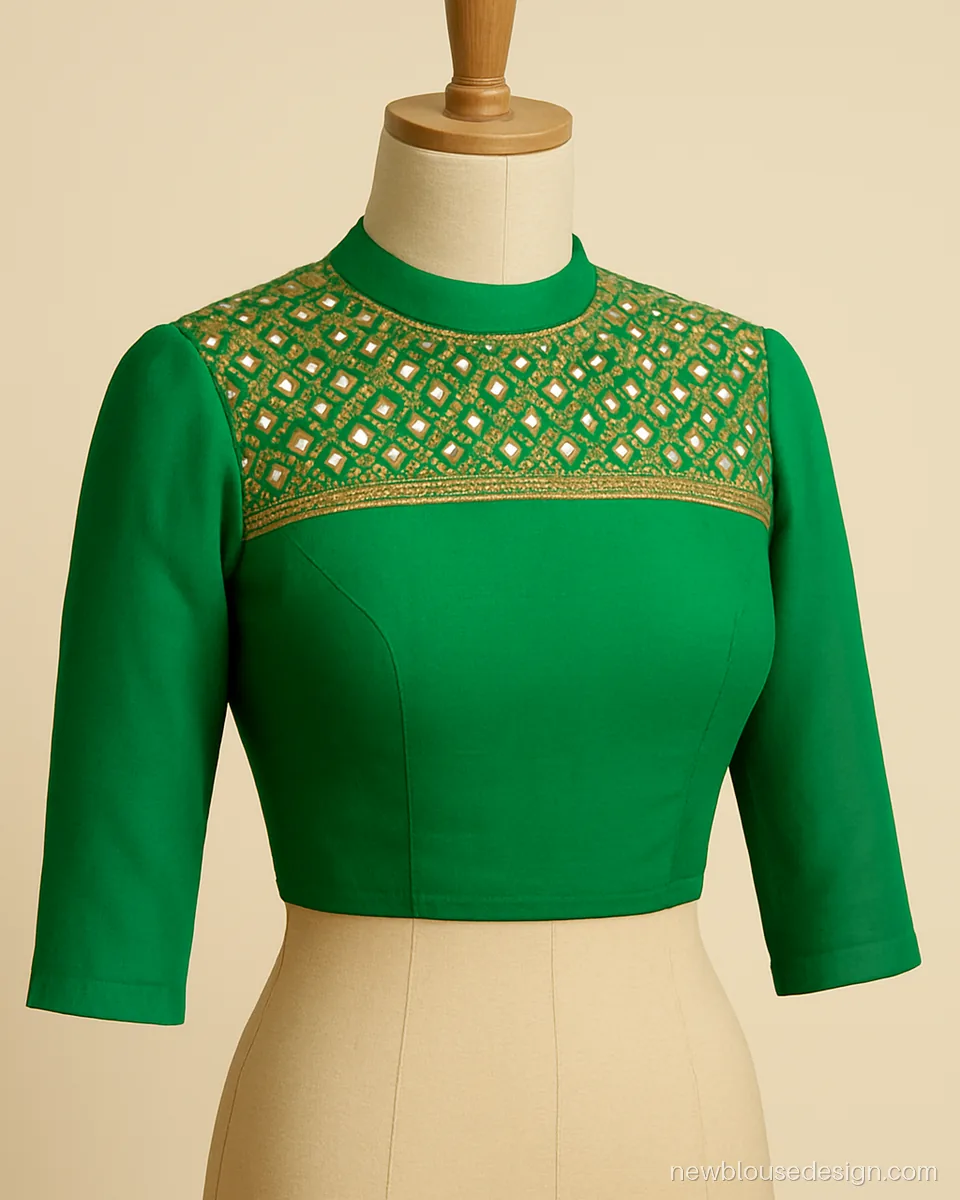
A mirror and zari yoke above the bust line looks rich and catches light. Good for teej and family weddings.
Tailor note: Yoke 4 inches deep with mirror and zari, three-quarter sleeves, lining in cotton.
Gota Patti Blouse Design
Gota patti is a Rajasthani craft where gold or silver ribbon is cut and stitched into leaves and flowers. From light borders to a heavy gota patti blouse design, it suits leheriya, bandhani and chiffon sarees.
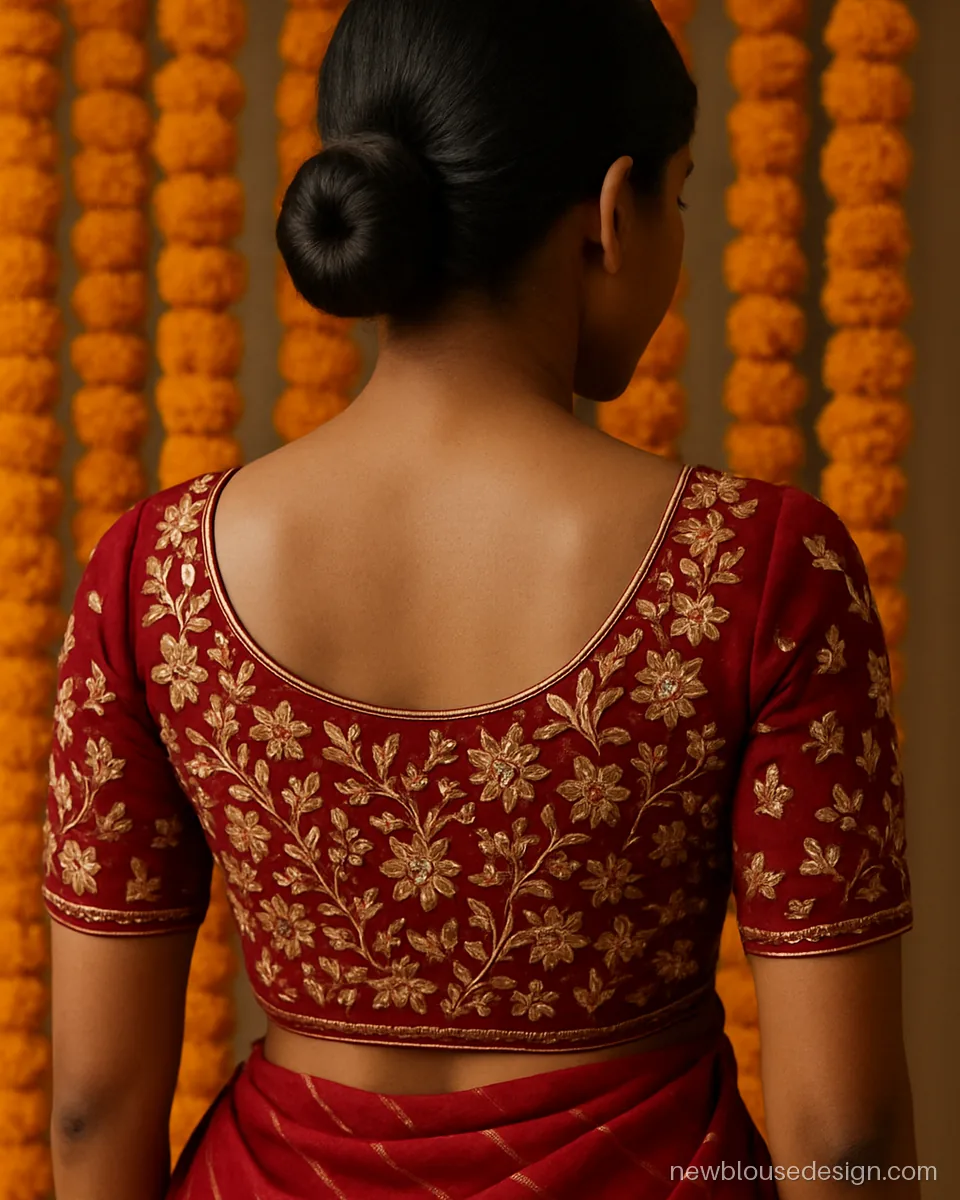
Gota flowers spread over the full back make a heavy, festive blouse for weddings. Keep the saree in a lighter shade.
Tailor note: Gota flowers on full back, U neck 8 inches, cotton lining so gota does not scratch.
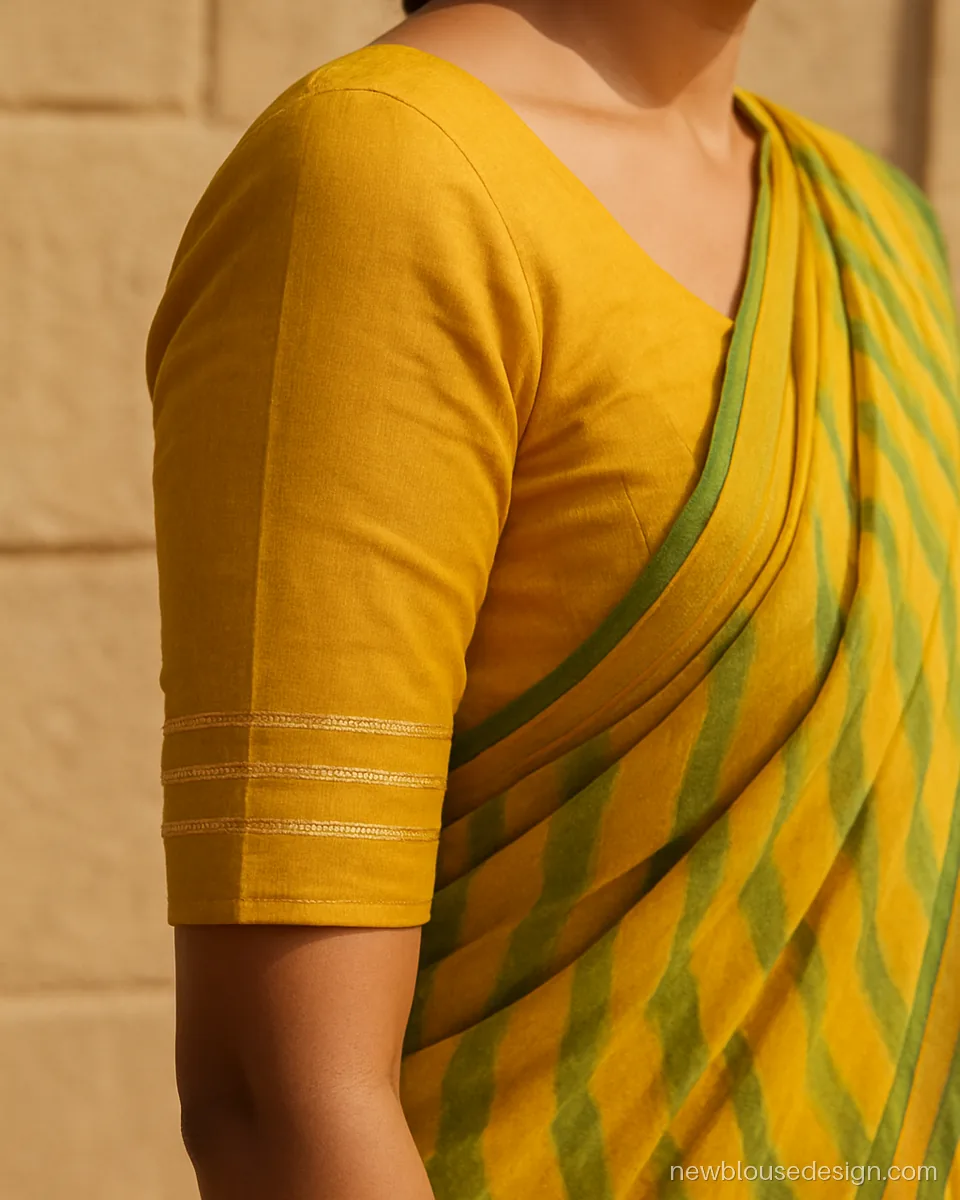
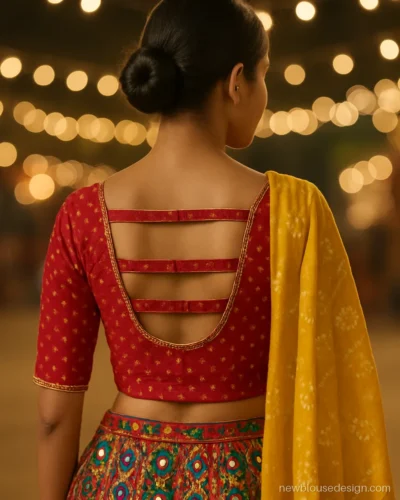
Three thin gota bands on the elbow sleeves look traditional without going heavy. A nice match for a leheriya saree.
Tailor note: Elbow sleeves, three bands of 1 inch gota with half inch gaps.
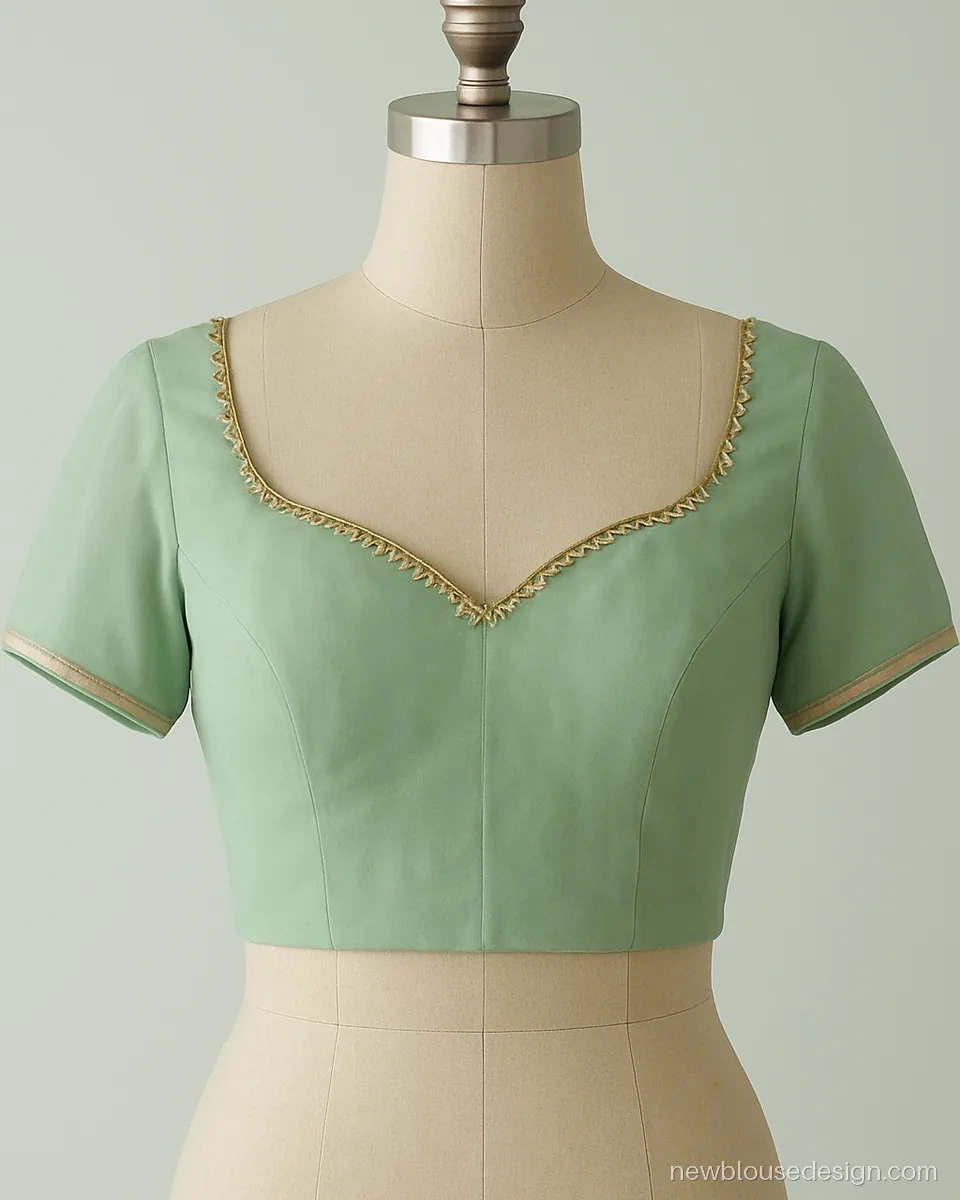
Small gota patti leaves along a sweetheart neck feel light and young. Good for mehendi or a sangeet.
Tailor note: Sweetheart front 6 inches, gota patti leaves on edge, short sleeves.
Rajwadi and Marwadi Saree Blouse Design
A rajwadi saree blouse design has a royal feel: zardozi, gota and deep colours. A marwadi blouse design is usually more covered, with elbow or full sleeves and a modest back. Our bandhani blouse design page has more ideas for tie-dye sarees.
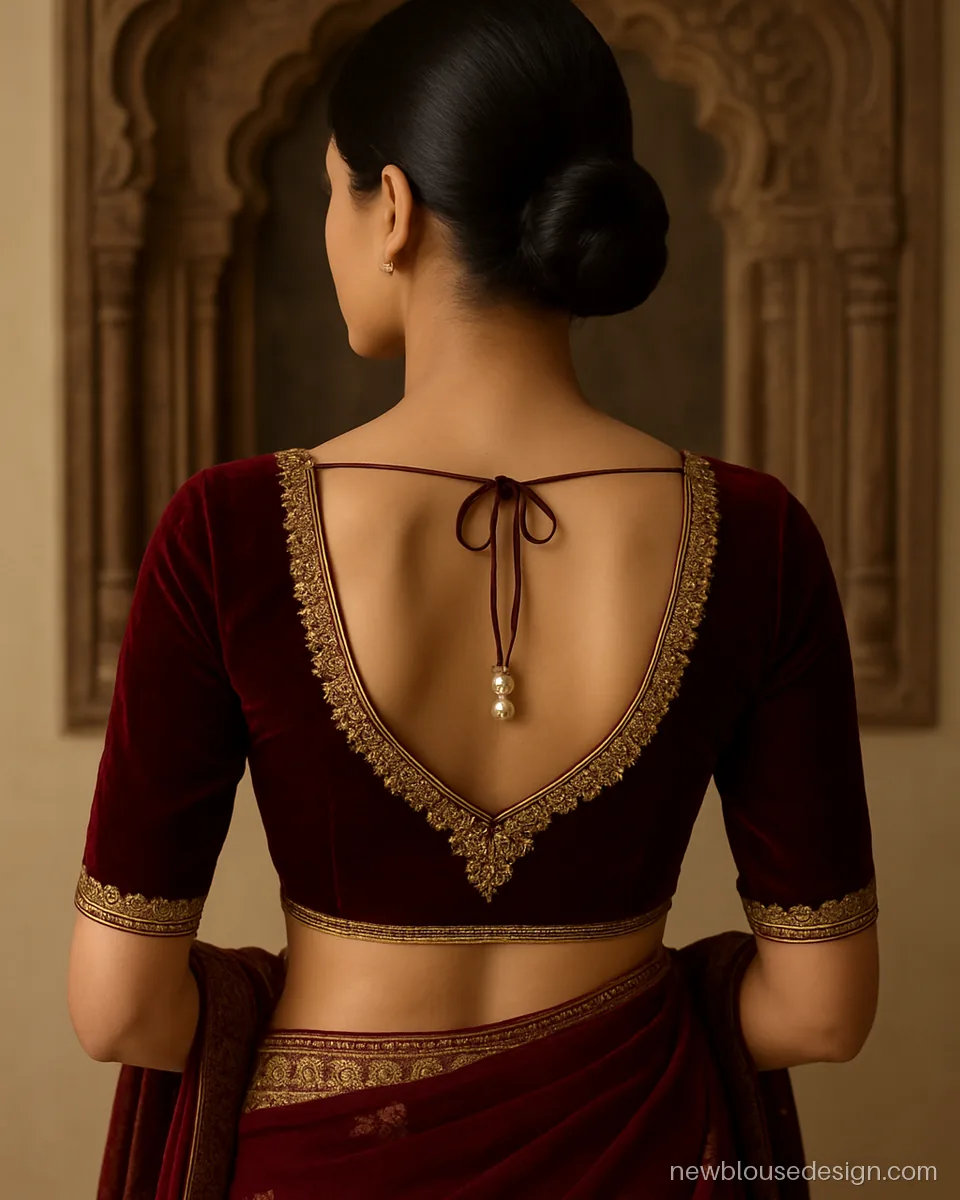
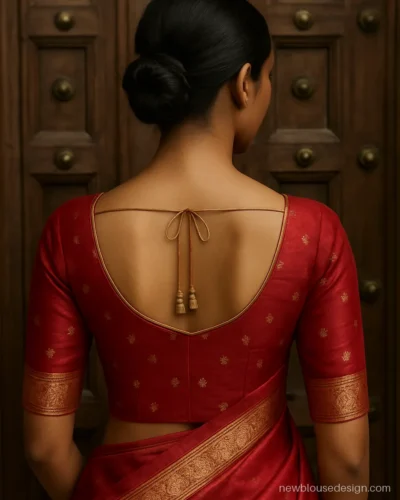
Zardozi around a paan back and a pearl latkan bring the royal Rajwadi look. Ideal for a heavy silk or georgette saree.
Tailor note: Paan back 9 inches, zardozi border, pearl latkan dori, padding.
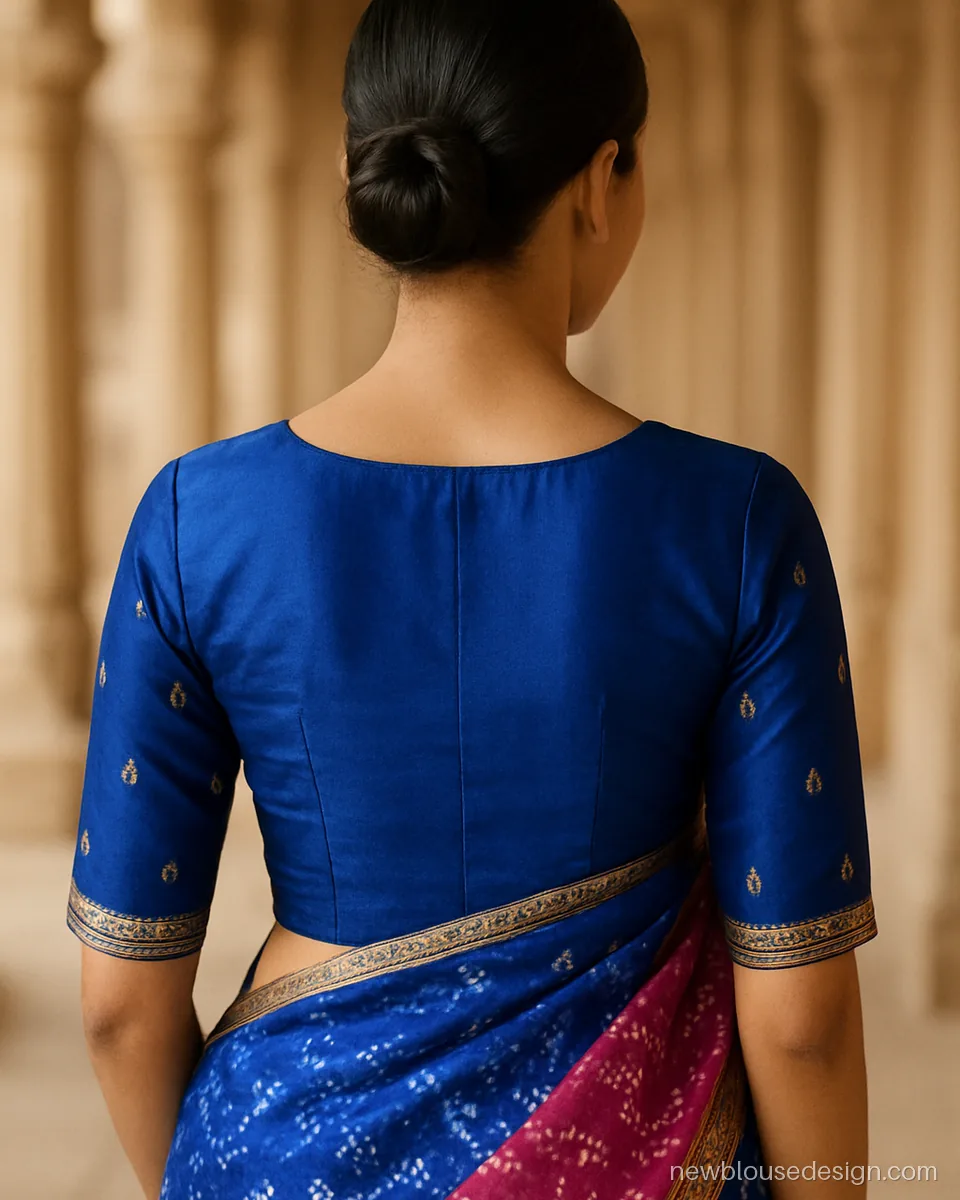
A closed round back with elbow sleeves is modest and graceful. Perfect under a pallu for family functions.
Tailor note: Closed round back 6 inches, elbow sleeves, small gota motifs on sleeves.
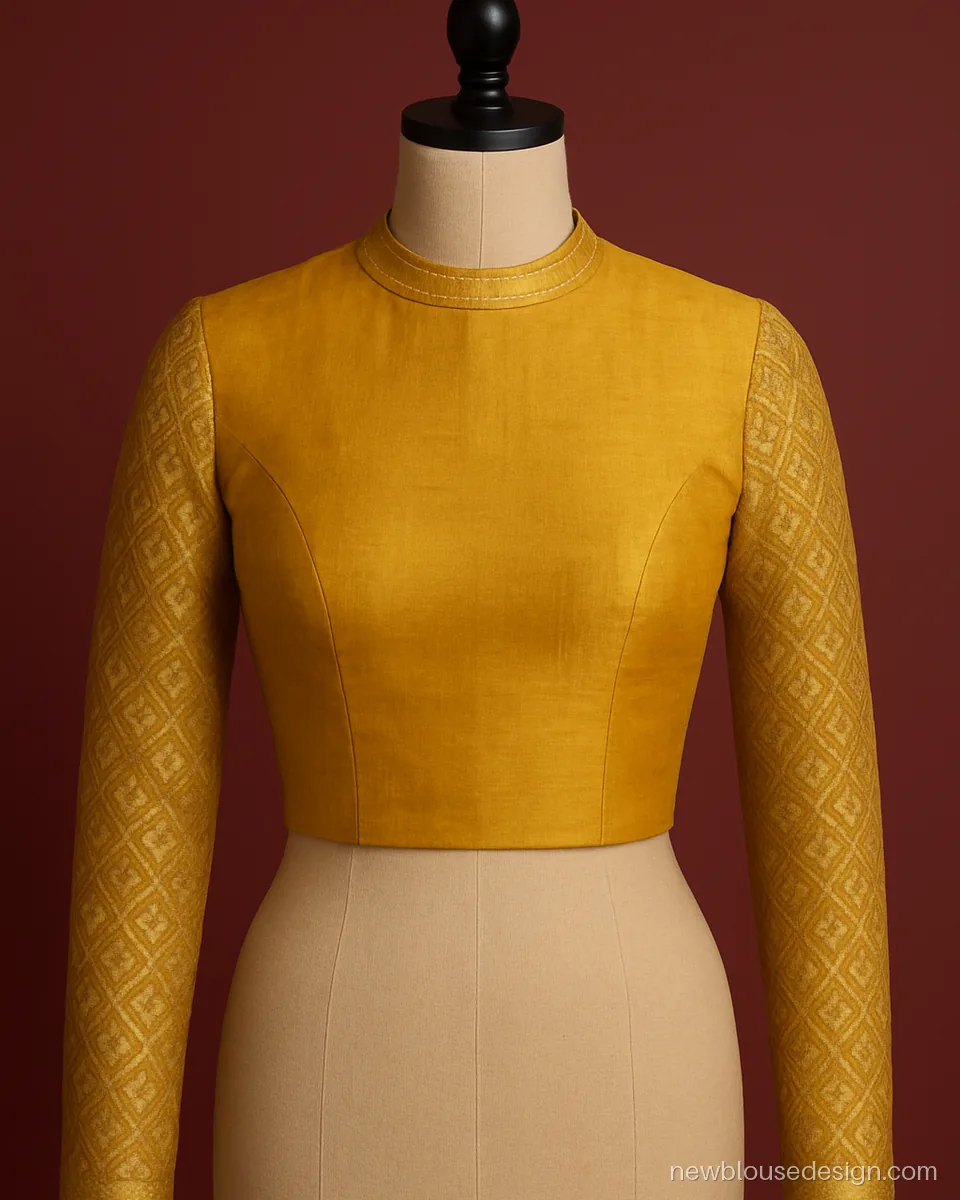
A high neck with full zari sleeves looks grand and covered. Pair with a heavy rajwadi saree in red or green.
Tailor note: High round neck, full sleeves with zari jaal, back hooks under placket.
Gujarati Blouse Design and Kutch Work
Gujarati blouses share a lot with Rajasthan: mirrors, bright thread and bandhani. Kutch embroidery uses small mirrors and colourful stitches in tight patterns. A gujarati blouse design is often lighter than a Rajasthani one, so it is easy to dance in at garba.
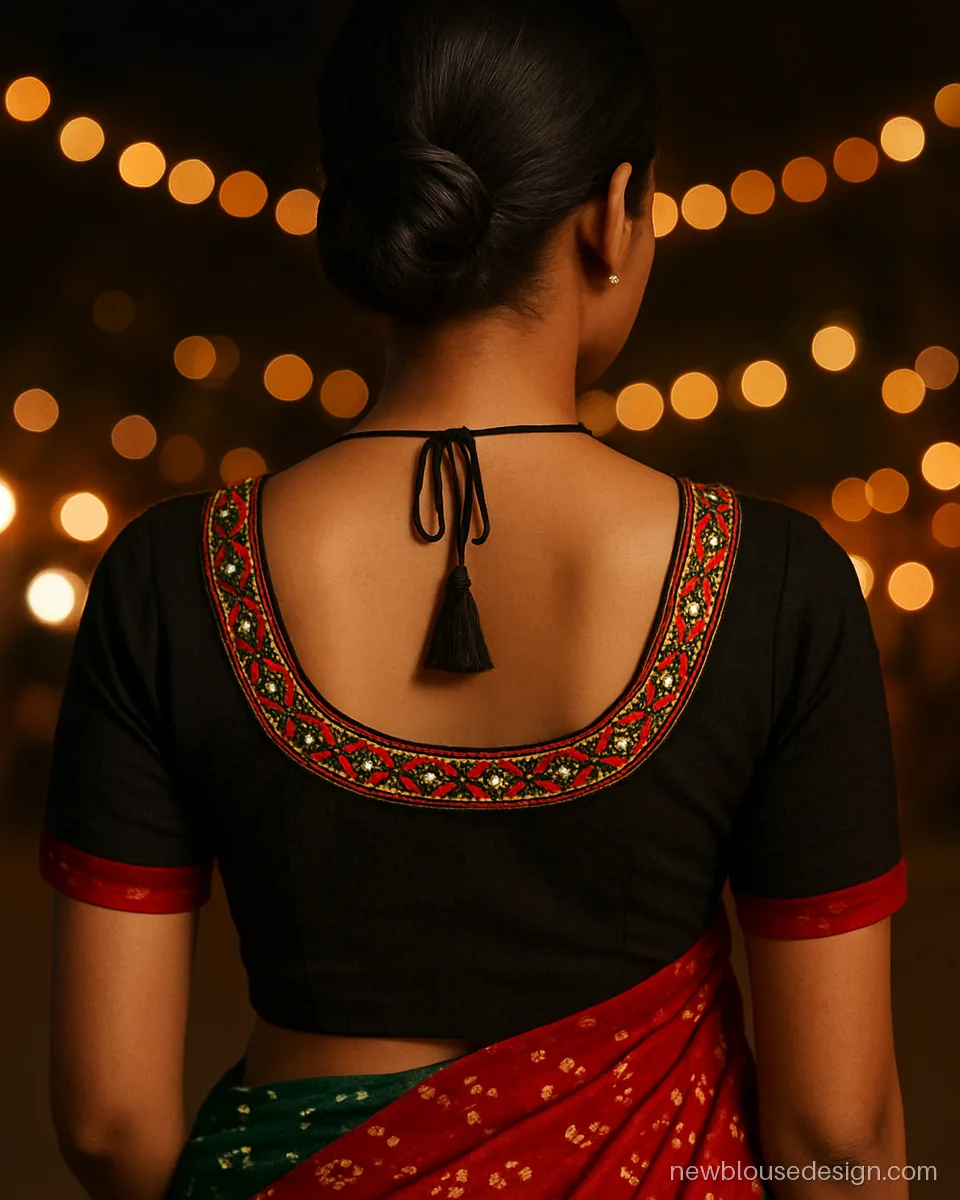
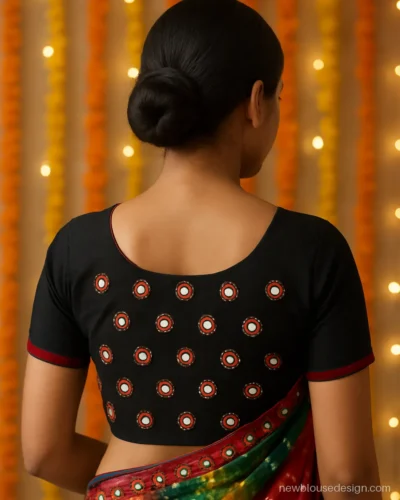
Kutch mirror work on black pops at garba nights. Pair with a red or multicolour bandhani saree.
Tailor note: U back 8 inches, Kutch work border 3 inches, tassel dori, cotton lining.
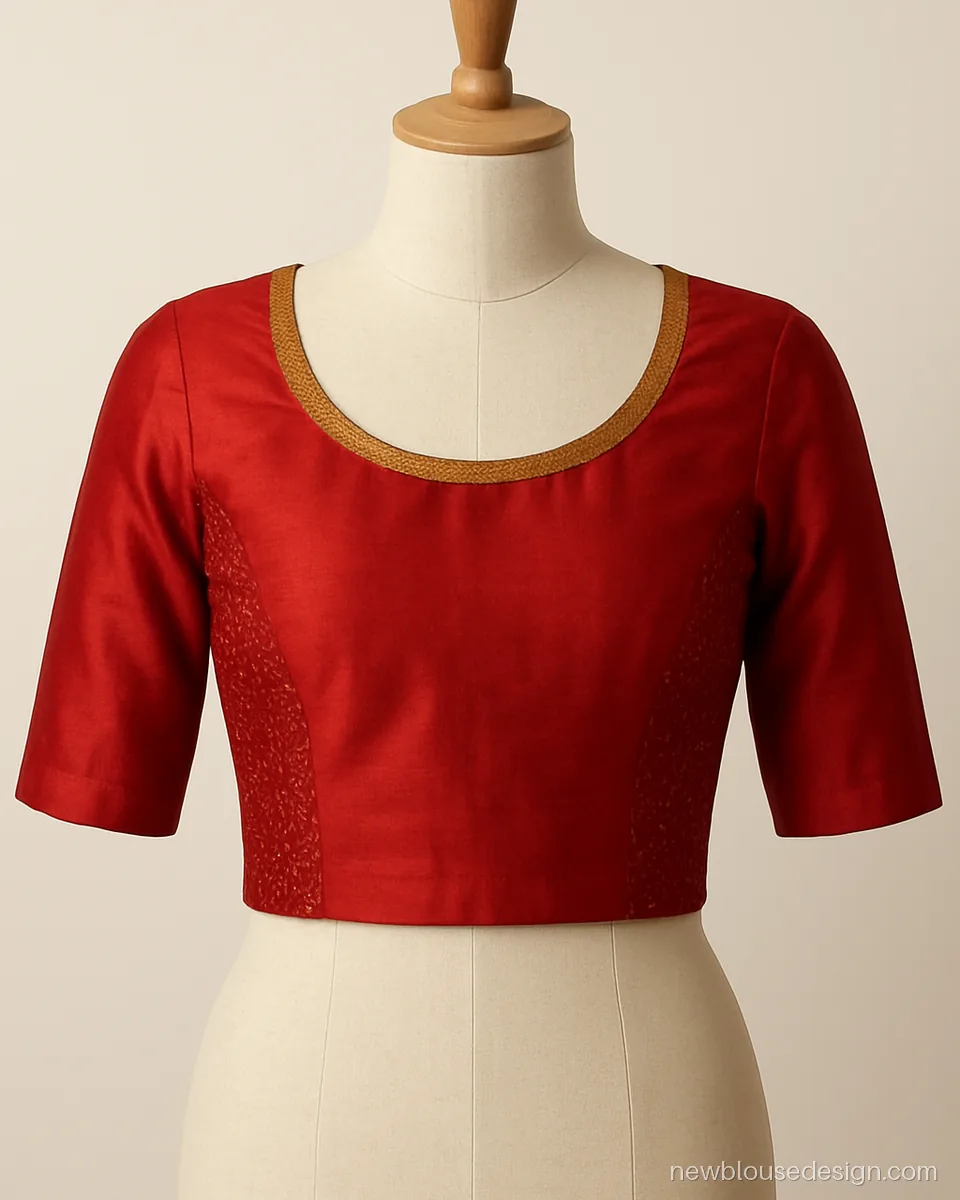
For the seedha pallu drape, the front shows more, so the blouse has front work and a simple back.
Tailor note: Round front 6 inches with zari border, elbow sleeves, back kept plain.
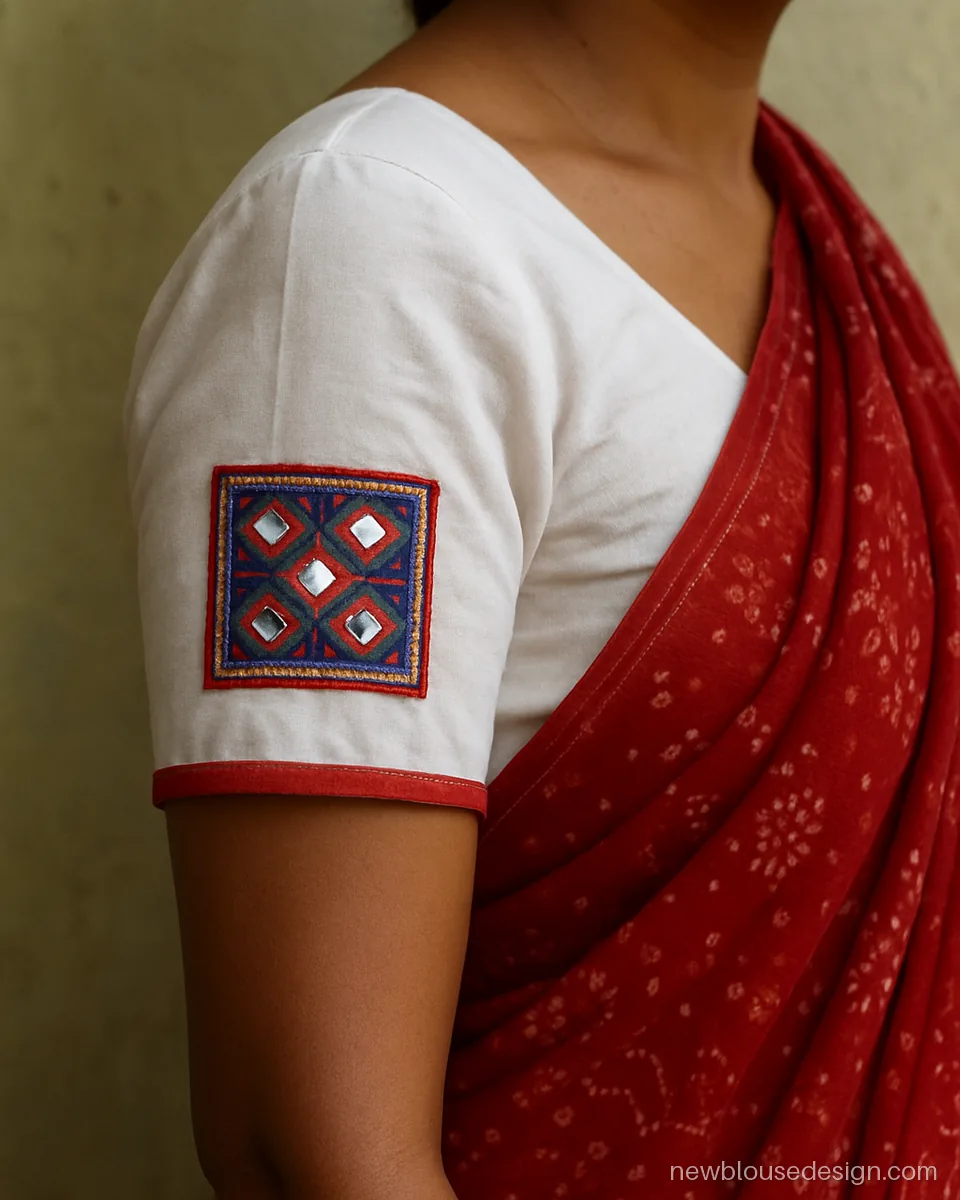
Kutch patches on the sleeves only keep the blouse light. Wear it with a plain coloured cotton or bandhani saree.
Tailor note: Short sleeves with Kutch patch, piping in red, plain body.
How to Pick a Rajasthani Blouse
| Outfit | Blouse idea |
|---|---|
| Rajputi poshak | Full sleeves, round neck, gota border |
| Leheriya or bandhani saree | Gota patti neck or sleeve bands |
| Heavy rajwadi saree | Zardozi back, high neck or paan back |
| Navratri | Kutch mirror work, tassel dori |
A gota patti saree blouse design looks best when the saree has gota too. Match gold to gold or silver to silver.
Care and Stitching Tips for Gota and Mirror Work
- Line it: gota and mirror edges scratch. A soft cotton lining is a must.
- Light fabric: georgette and chiffon carry gota well, but very heavy work needs a firmer base like silk or cotton silk.
- Dry clean: gota can turn black with water. Store in a muslin cloth.
- Fit: poshak blouses are closely fitted, so ask for a trial before the tailor adds the gota.
For more traditional ideas, see our traditional blouse design page.
Questions women ask
What is a rajputi poshak blouse design?
It is the fitted blouse worn with the Rajputi poshak, often called kanchli or kurti. It usually has full or three-quarter sleeves, a modest neck and gota or zardozi work. It is worn under the odhni.
How do I choose a gota patti blouse ki design?
Light gota borders suit daily festive wear. A heavy gota patti blouse design with flowers on the full back suits weddings. Match the gota colour to the saree.
Which rajwadi blouse back design suits a wedding?
A paan or U back with zardozi and a pearl or kundan latkan looks royal. Keep the depth about 8 to 9 inches and add padding.
What is the difference between a marwadi blouse design and a Gujarati one?
Both are colourful. Marwadi blouses are usually more covered with elbow or full sleeves. Gujarati blouses often use Kutch mirror work and are cut for the seedha pallu drape.
Can I wear a rajputi saree blouse design with a normal saree?
Yes. A full sleeve gota blouse looks lovely with a leheriya, bandhani or chiffon saree. It gives a traditional touch even to a plain saree.
What is a rajasthani blouse back design that is easy for daily wear?
Pick a round or U back about 7 to 8 inches deep with a thin gota border and one small tassel dori. It is light, quick to stitch and works with cotton leheriya or bandhani sarees. Skip heavy mirrors for daily use, as they catch on dupattas and bags.