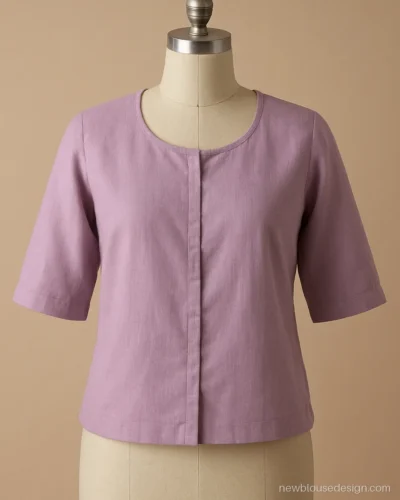
Bridal Blouse Design Ideas for Every Wedding Function
- 18 designs
- Occasion and wearer
- Updated Oct 2026
Your bridal blouse design has to do three jobs: look rich in photos, hold a heavy saree in place for hours, and still let you lift your arms for the pheras. Most photos are taken from the back, so the back gets the most work.
Here is what brides ask us for most:
- a heavy aari or zari back with a deep but supported neck
- a traditional wedding blouse back design for Paithani, Kanjivaram or Banarasi
- lighter, brighter blouses for haldi, mehndi and the reception
Start your fittings about six weeks before the wedding. That leaves time for two trials and the final finishing.
Bridal Blouse Back Design
These backs are made for the camera. Every wedding blouse back design here has a solid base, so it stays in place under a heavy dupatta or pallu.
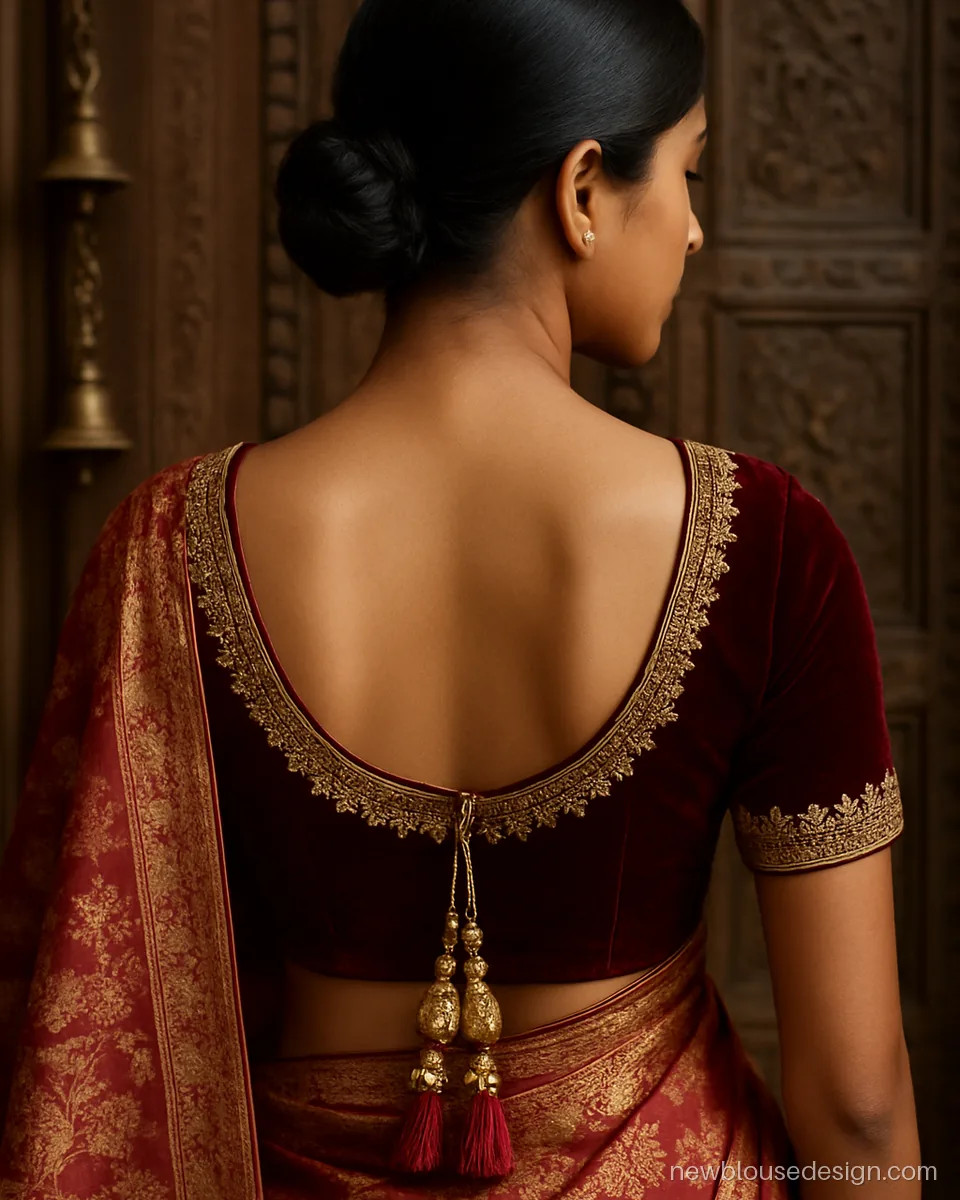
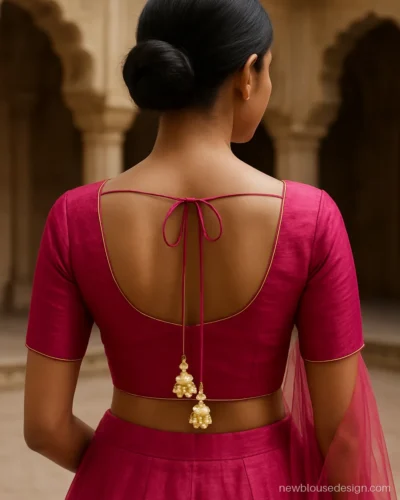
Dense zardozi work frames a deep U back and ends in heavy gold latkans. The classic choice for a red wedding saree.
Tailor note: Deep U about 10 inches, padded, zardozi border 2 inches wide, dori with heavy latkans.
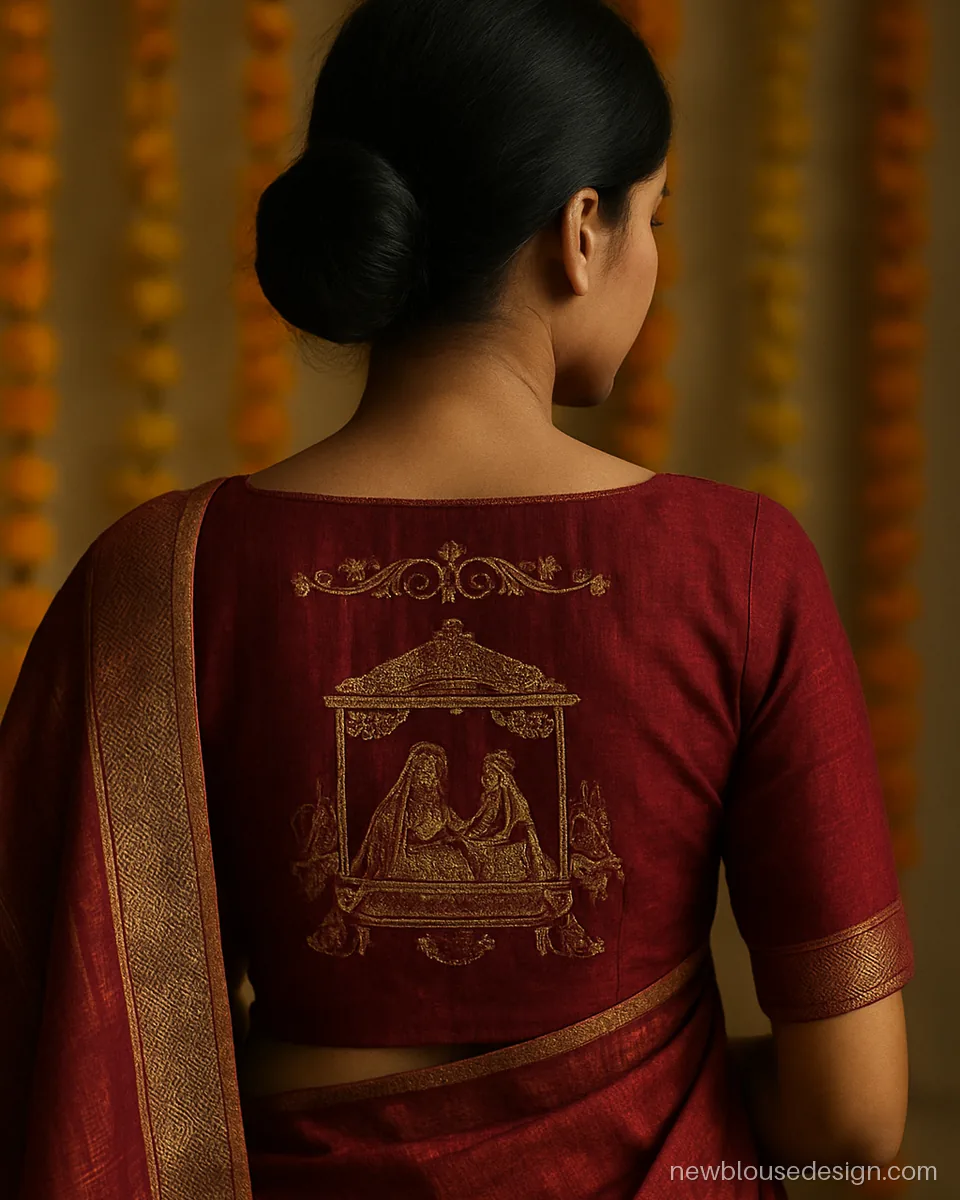
A hand-embroidered doli and bride-groom scene fills the back. Many brides add the husband's name in the scroll above it.
Tailor note: Keep a 3 inch blank scroll above the scene for the name; back neck closed and high.
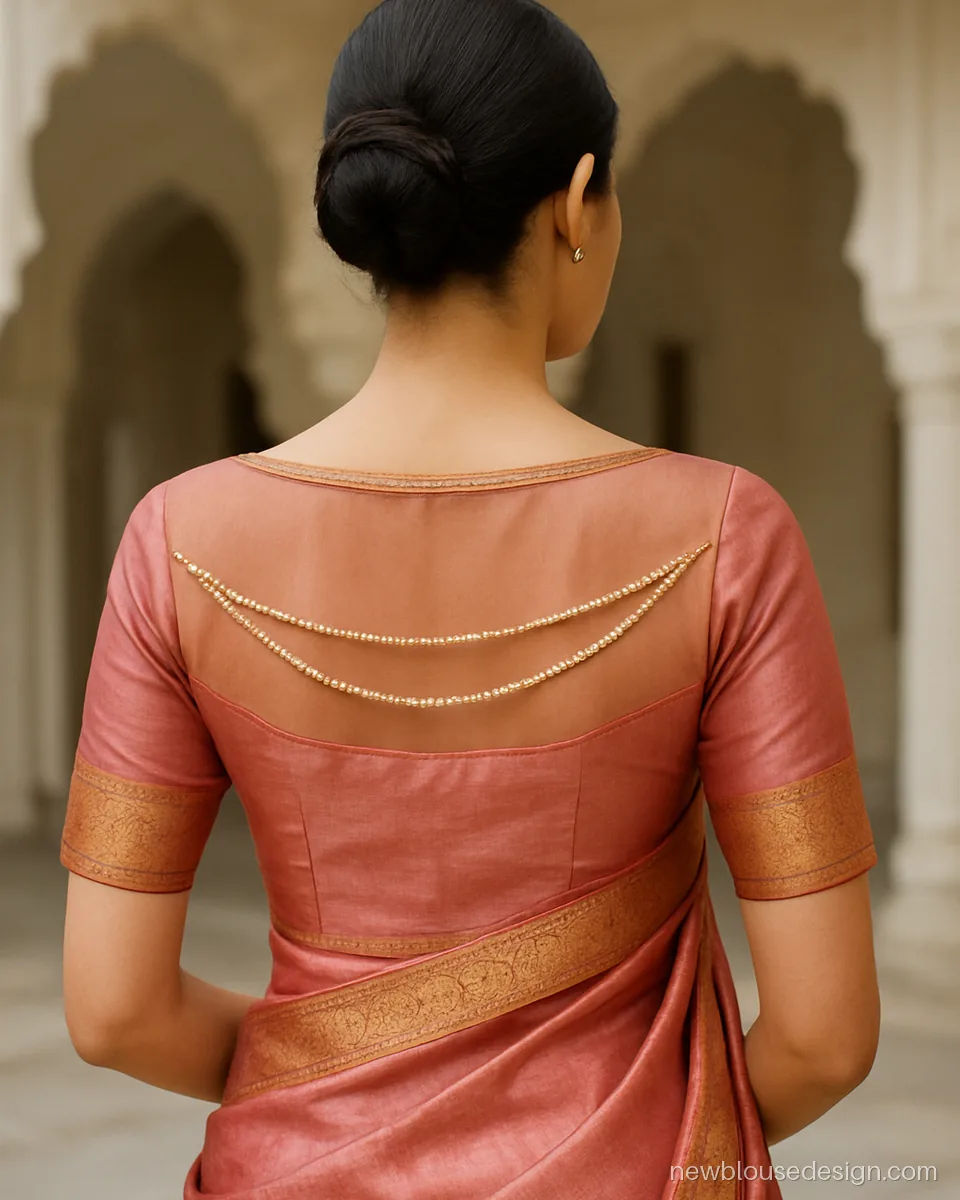
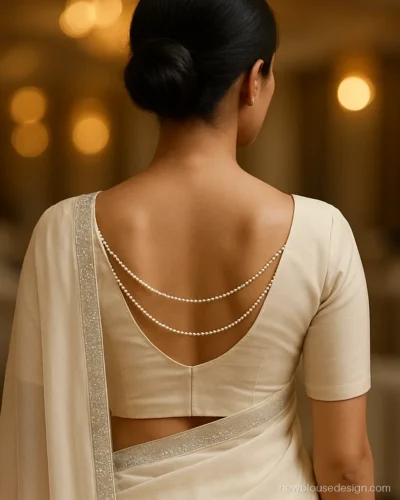
A sheer net yoke edged in pearl strings looks soft and bridal without being too deep. Lovely with pastel lehengas and sarees.
Tailor note: Net yoke till 9 inches, pearl strings hang in three loops, hooks on solid lower band.
Wedding Blouse Design with Heavy Aari Work
Aari and maggam work give the raised, glittering finish brides love. Plan the work before stitching, as embroidery is done on the cut pieces. More ideas on our aari and maggam work page.
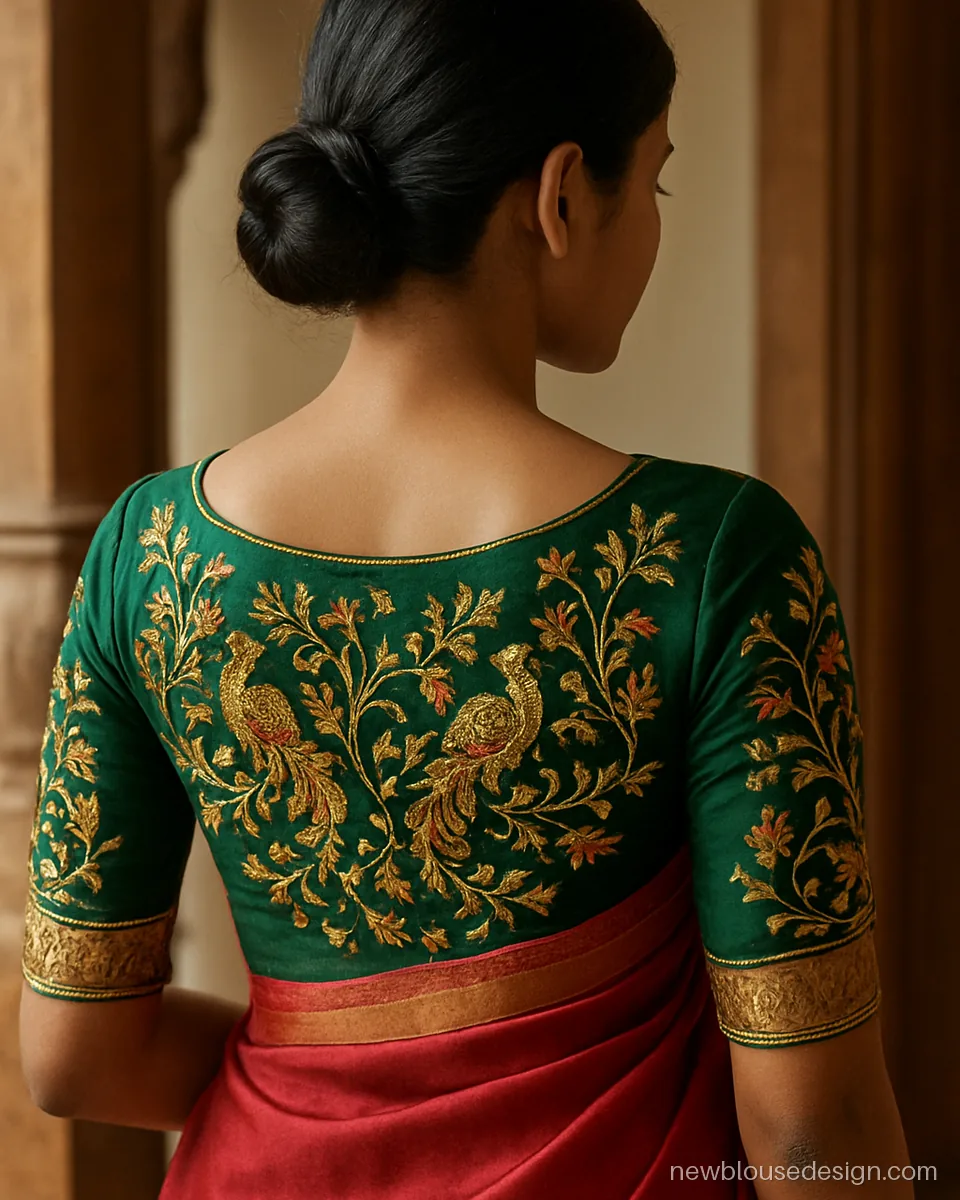
Aari work covers the whole back and elbow sleeves in gold and red thread. A rich match for a contrast green and red silk saree.
Tailor note: Mark the design on cut pieces first, cotton lining, elbow sleeves with 1 inch ease.
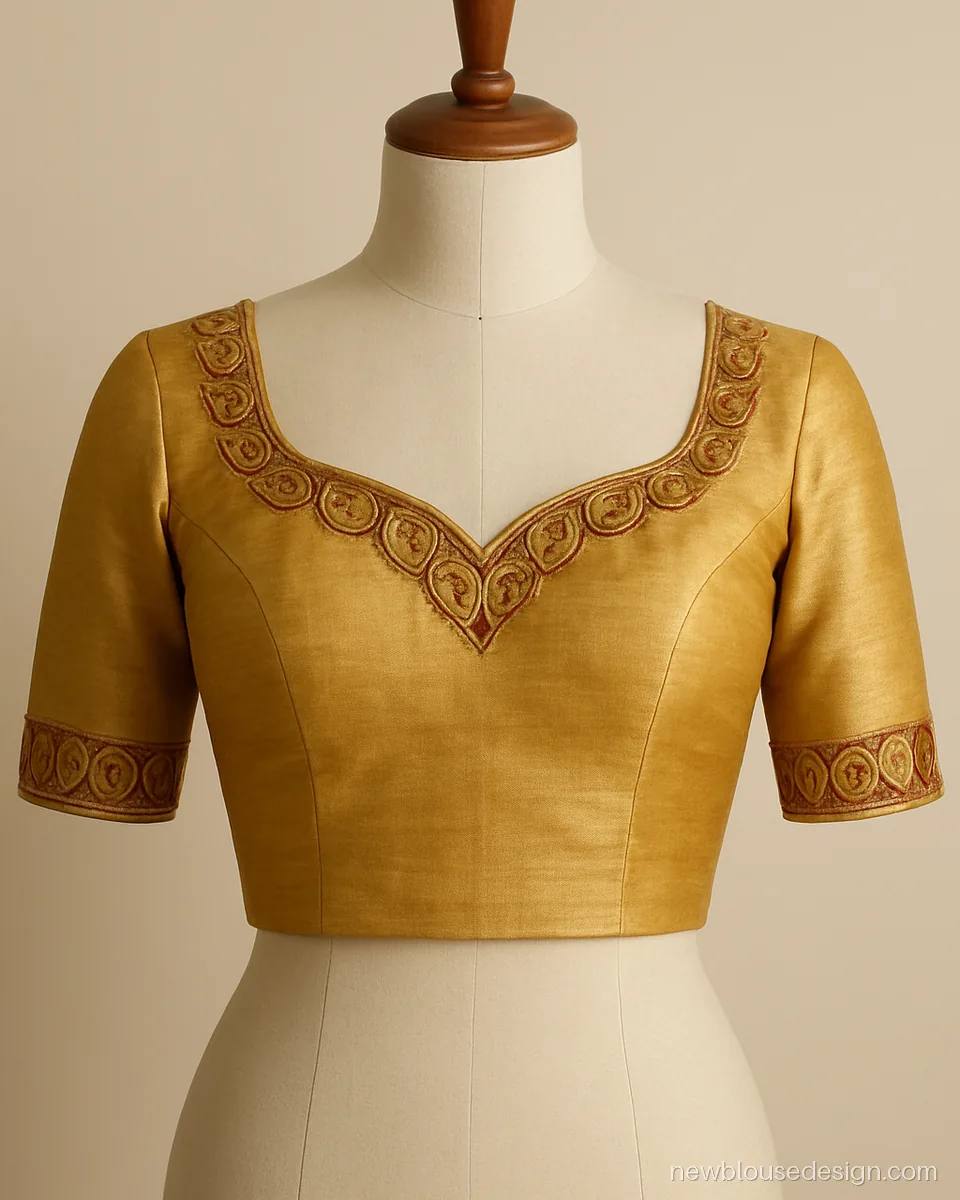
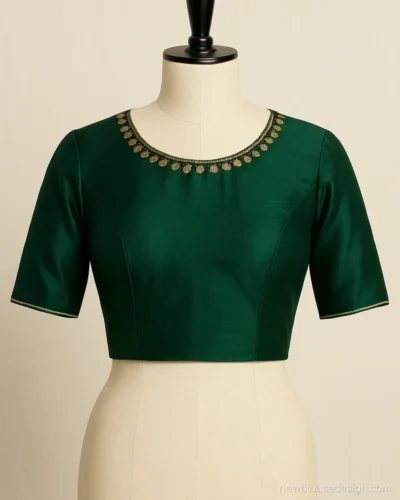
Mango motifs in aari work line the sweetheart neck and sleeve hems. Works with nearly any bridal saree colour.
Tailor note: Sweetheart front 7 inches with padding, mango motif border on neck and sleeves.
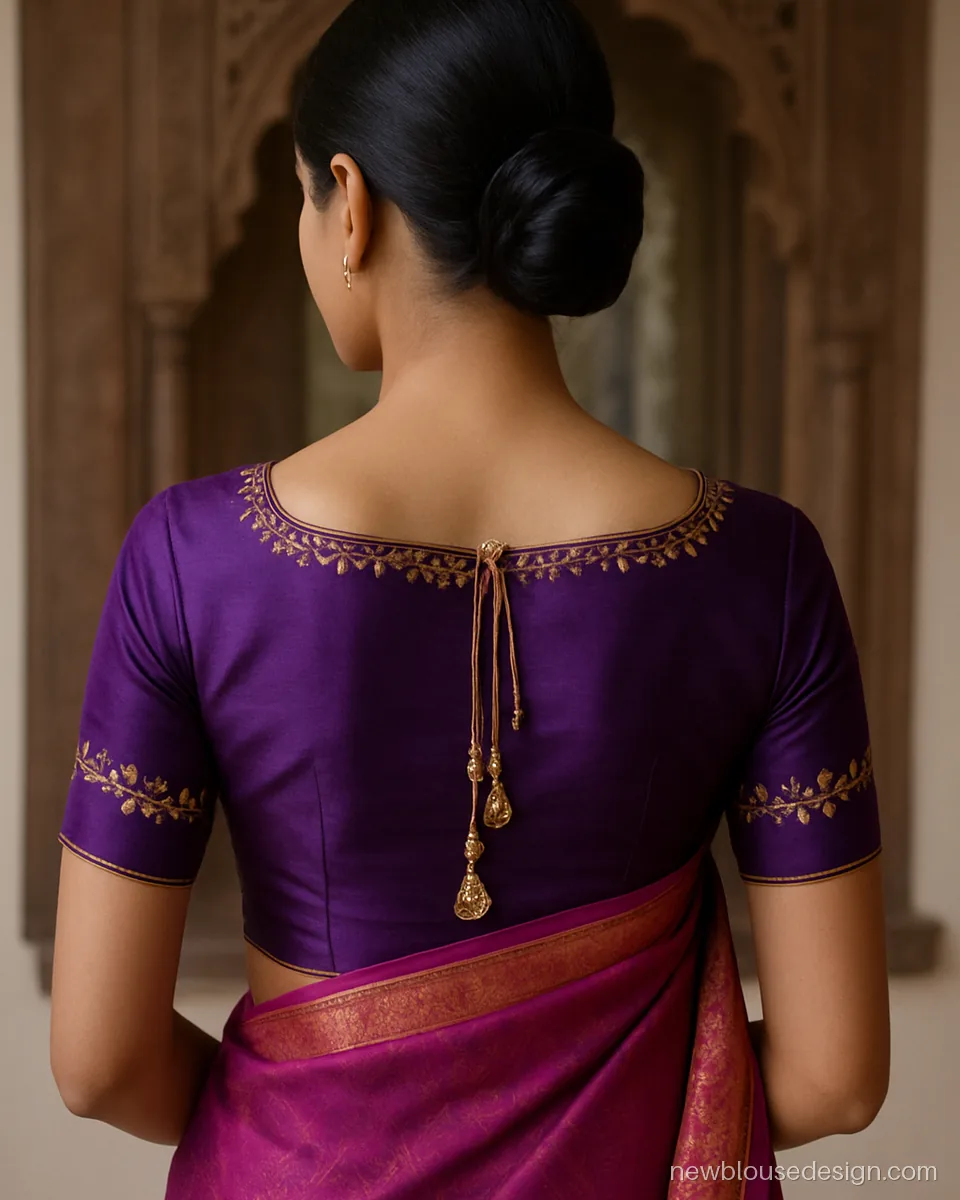
Fine creepers with kundan stones climb the back and meet at a long dori. Regal on purple or wine Kanjivaram sarees.
Tailor note: Fix stones by hand, not glue; dori about 12 inches with kundan latkans.
Bridal Blouse Sleeves Design
Your arms show in every ritual photo. Bridal sleeves are usually elbow length or longer, with the border or embroidery at the hem.
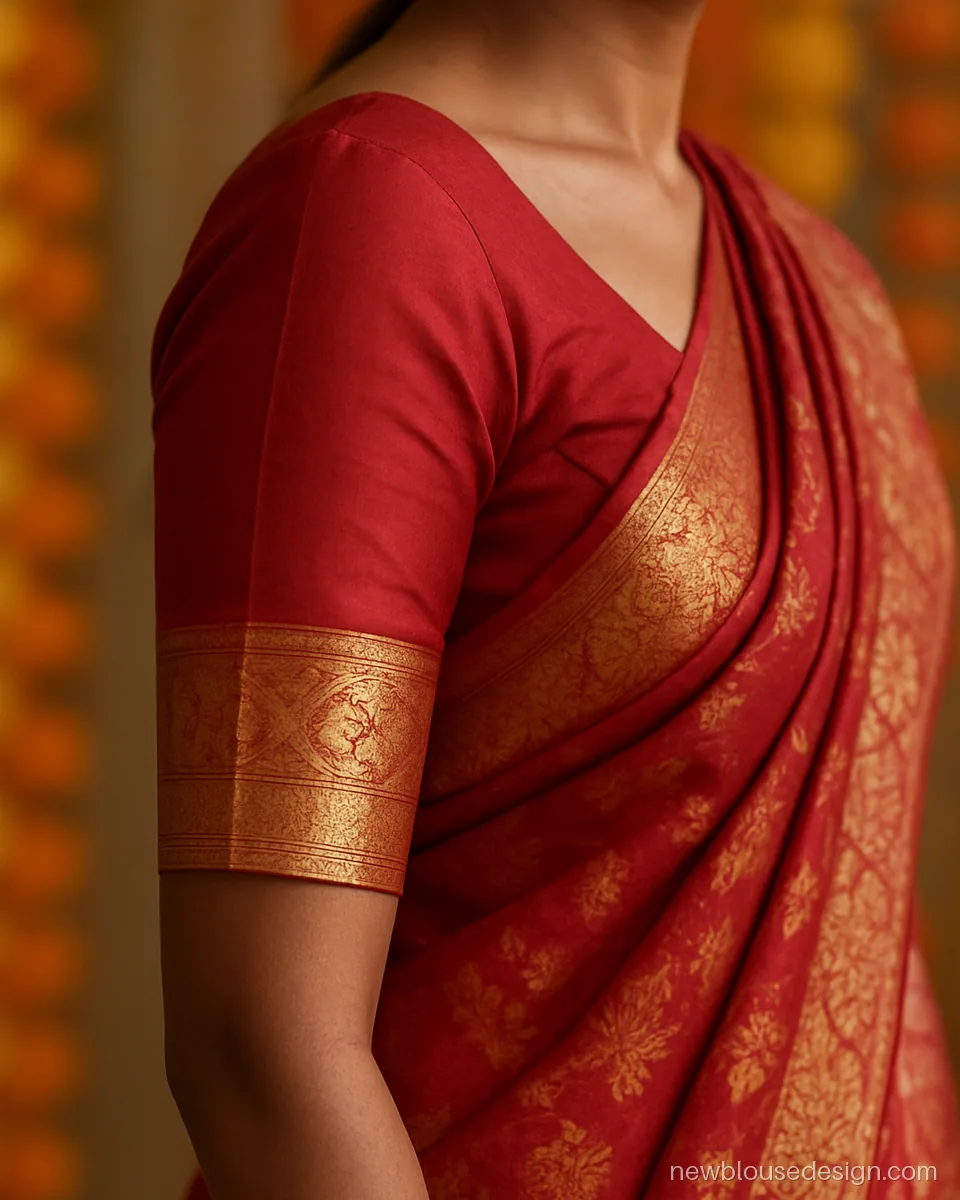
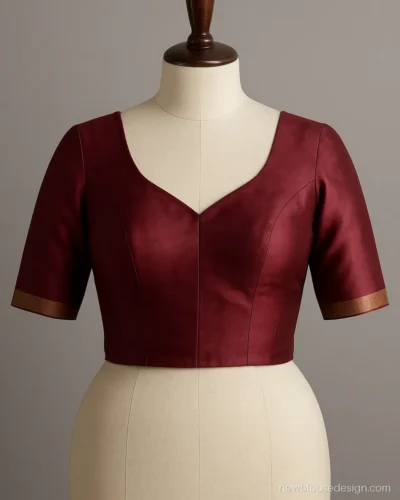
A wide zari border at the elbow matches the saree border. Simple, timeless and photographs very well.
Tailor note: Cut sleeve border from saree, keep sleeve 1 inch above elbow, line with cotton.
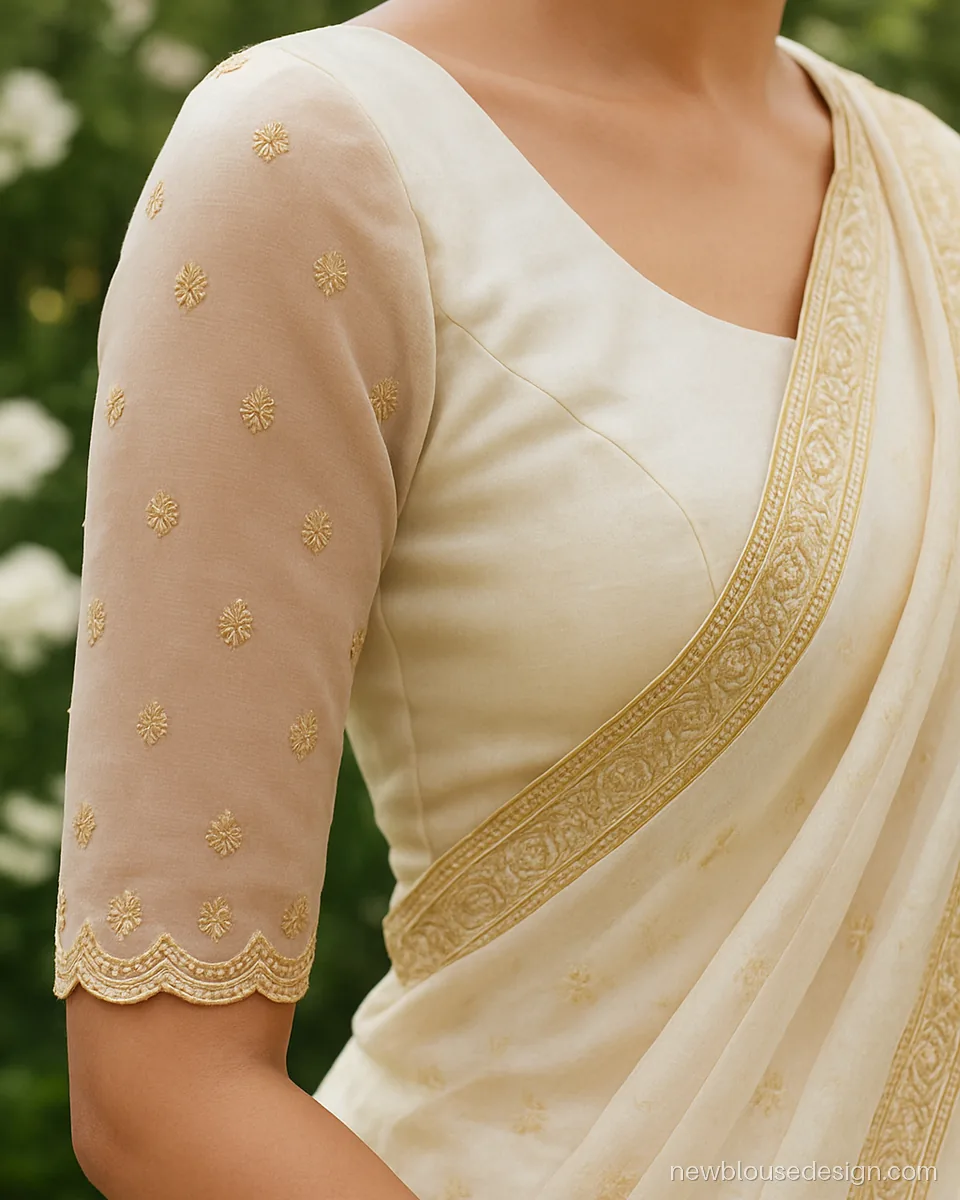
Sheer three-quarter sleeves dotted with gold motifs feel light for a summer wedding. A quiet choice for a bride who loves pastels.
Tailor note: Three-quarter net sleeves, motifs hand-stitched, scalloped embroidered edge at hem.
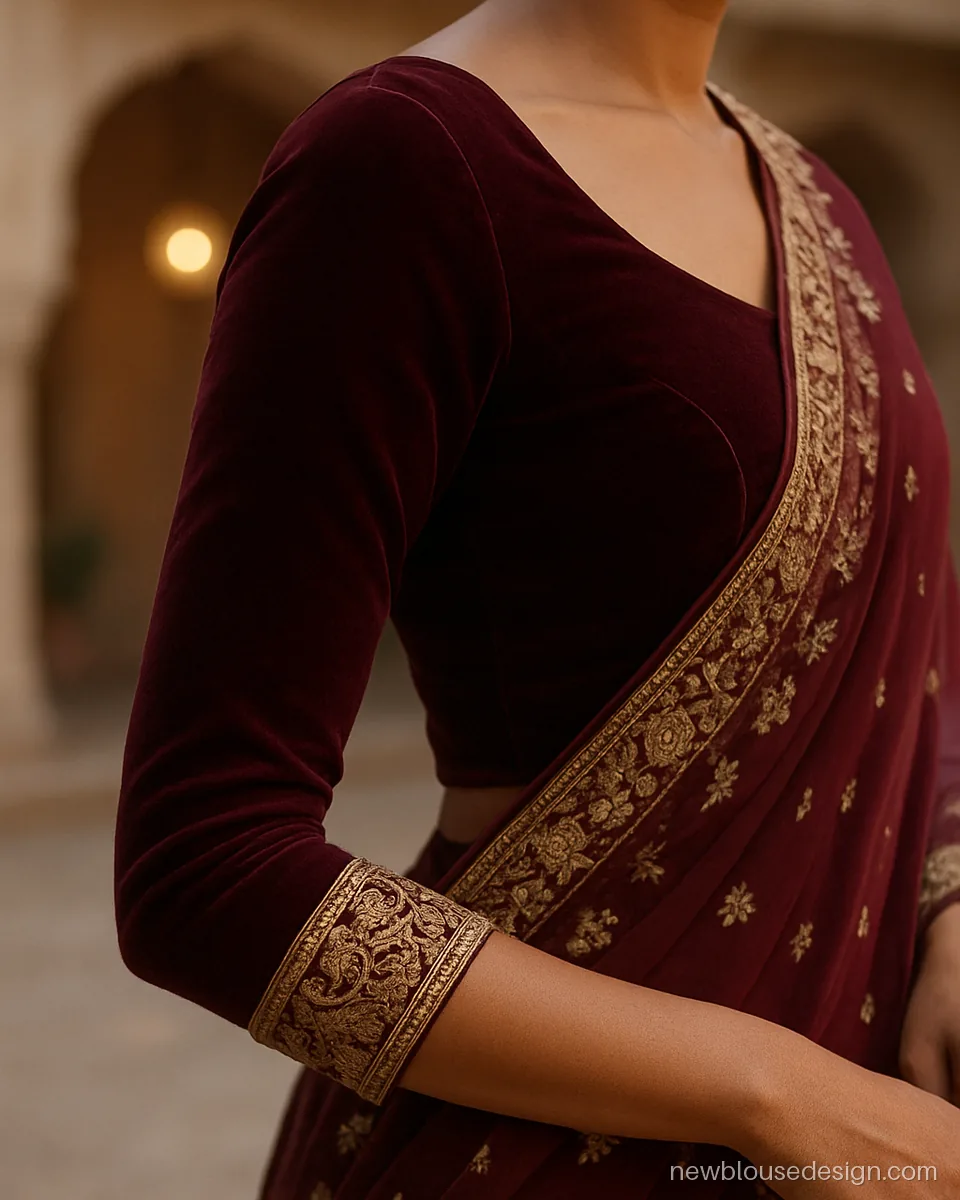
Full velvet sleeves with zardozi cuffs keep you warm at winter weddings. Perfect with a wine or deep red lehenga.
Tailor note: Full sleeve with side zip at wrist, zardozi cuff 3 inches, allow arm movement ease.
Traditional Wedding Blouse Back Design for Paithani and Kanjivaram
A silk saree traditional wedding blouse back design uses the saree's own motifs. The Paithani peacock and the Kanjivaram temple border both look best when the tailor places them carefully. See our Paithani blouse designs too.
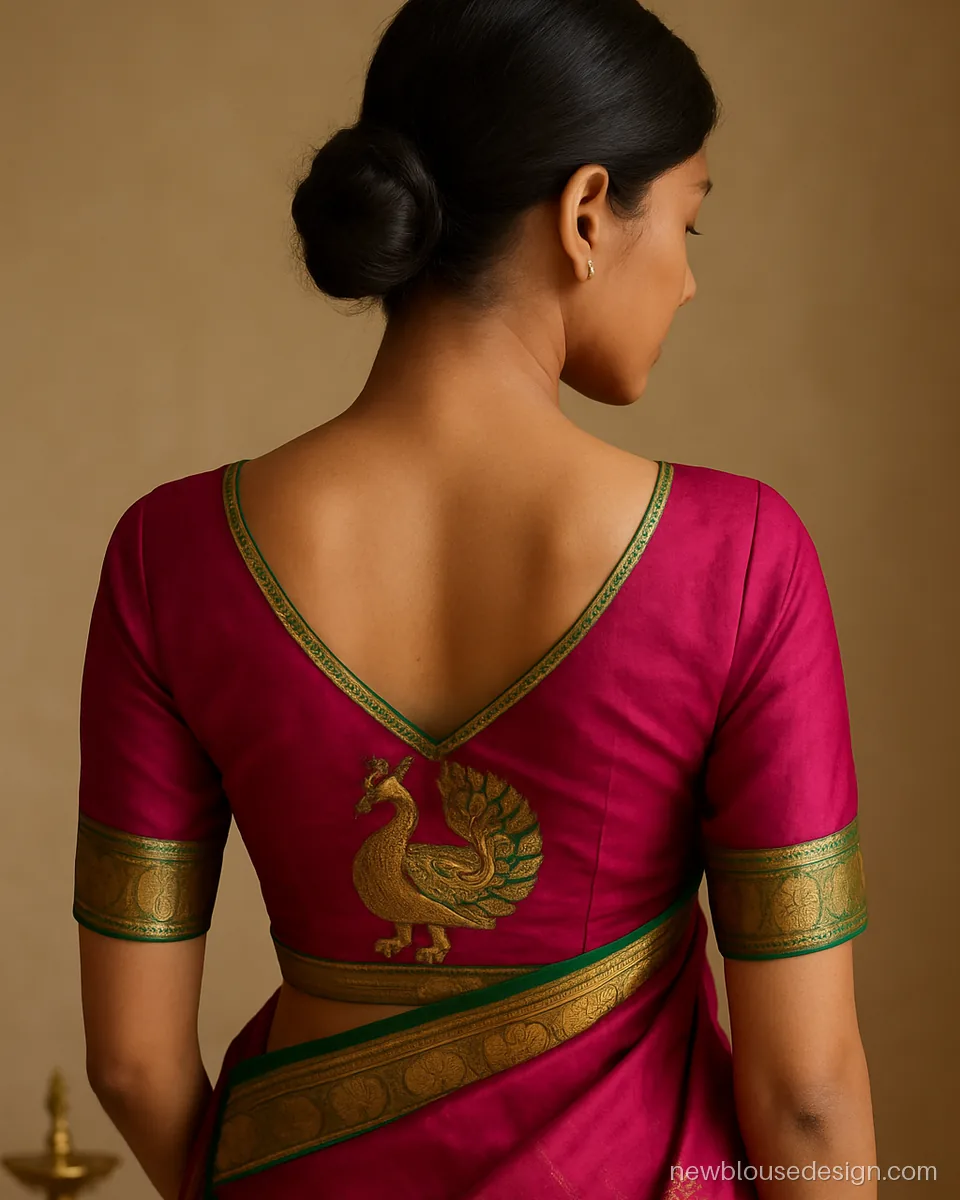
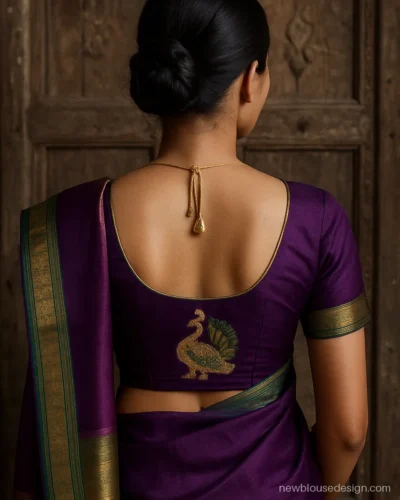
The Paithani peacock sits centred on the back with the border around the neck. A must for a Maharashtrian bride in a Nauvari or regular drape.
Tailor note: Centre the peacock 2 inches below neck, border piping around the paan neckline.
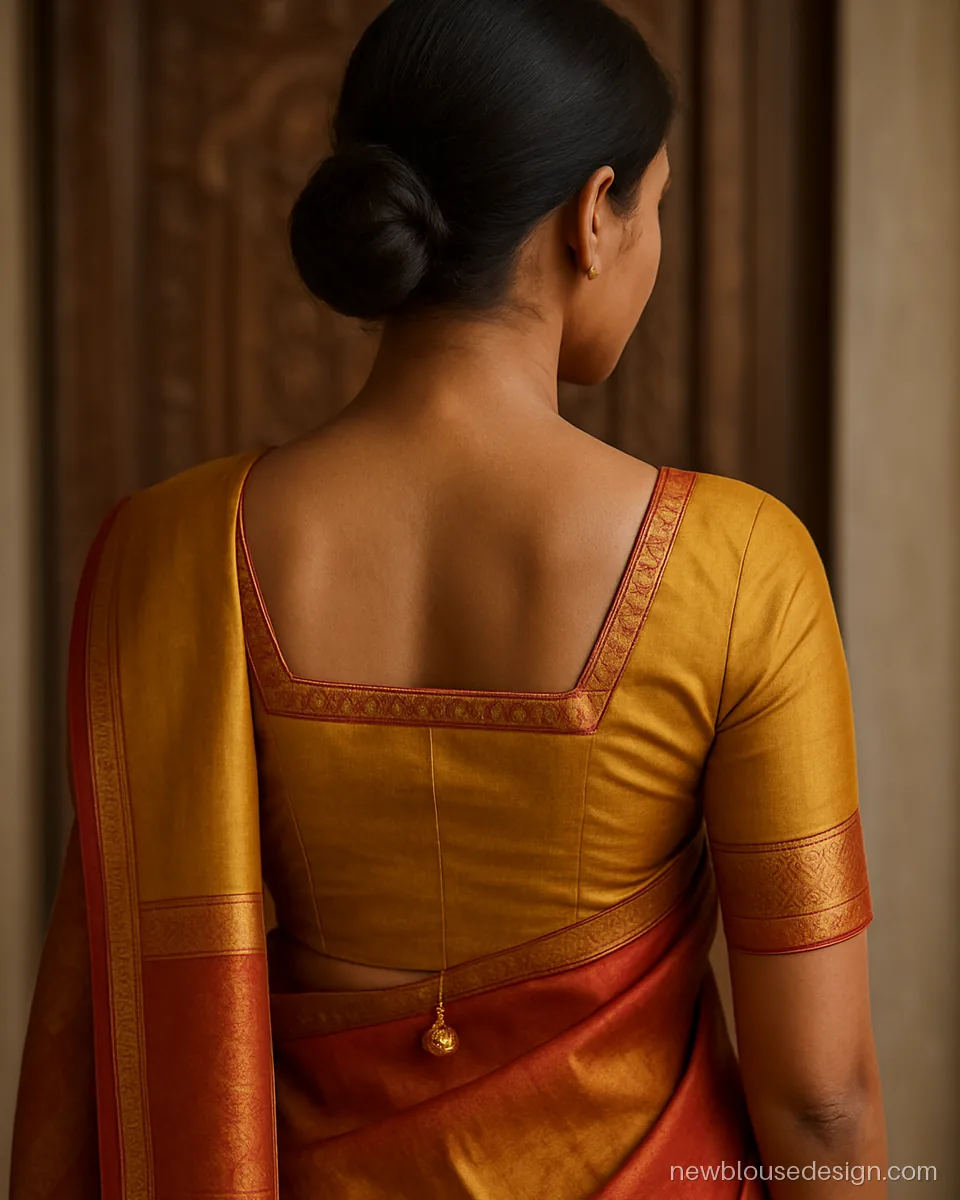
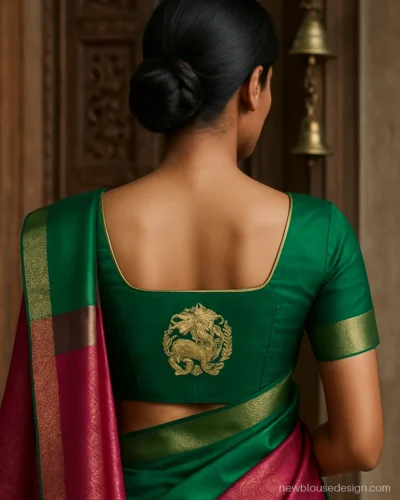
The temple border runs around a square back neck like a frame. A strong, traditional look for a South Indian bride.
Tailor note: Square back about 8 inches, temple border mitred neatly at corners, cotton lining.
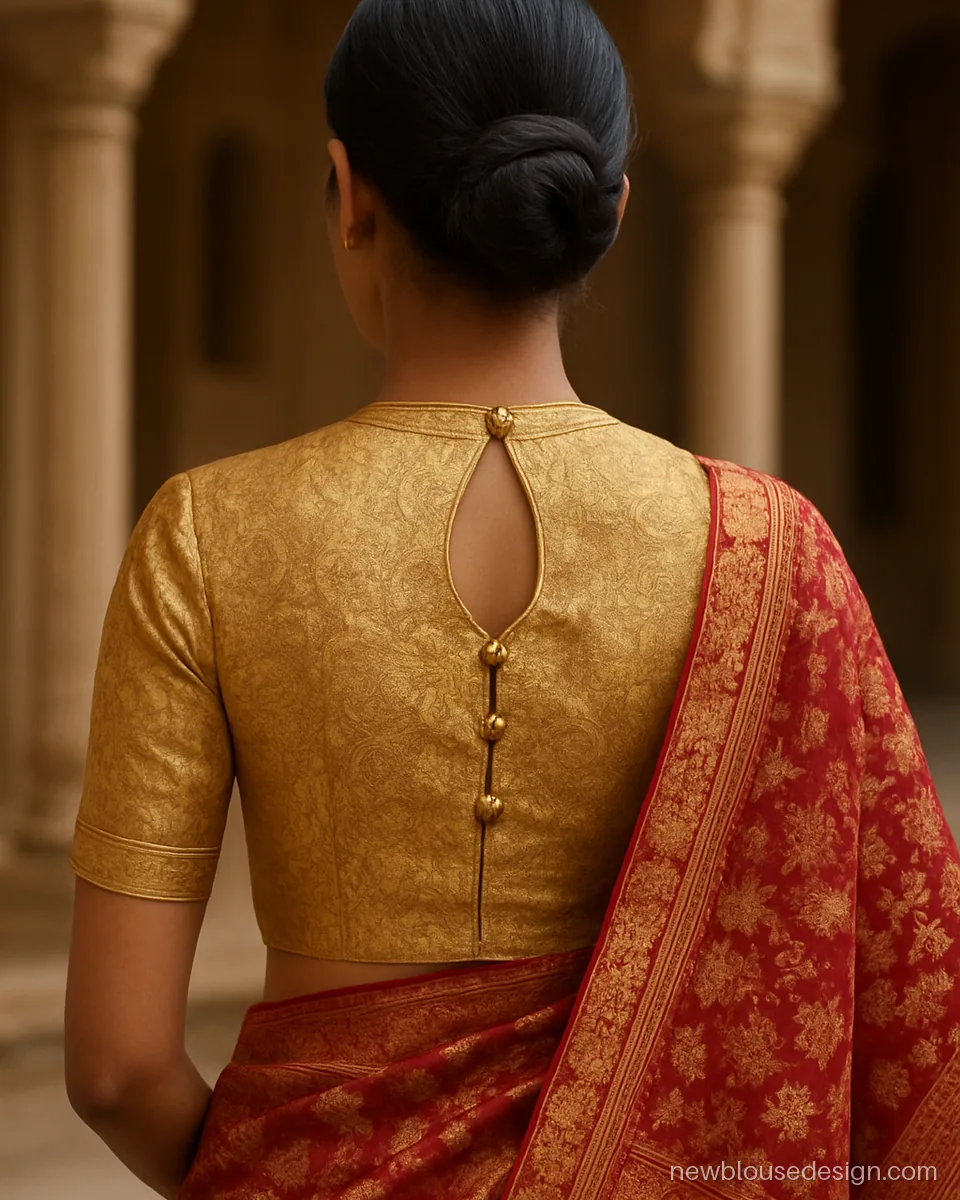
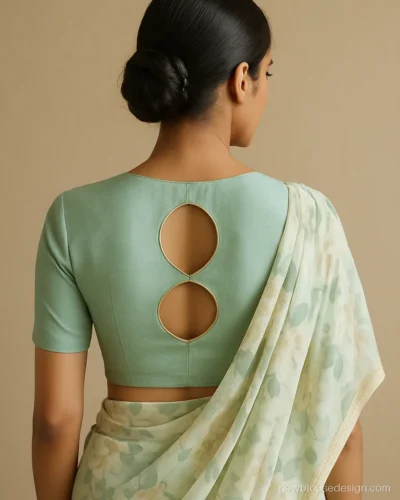
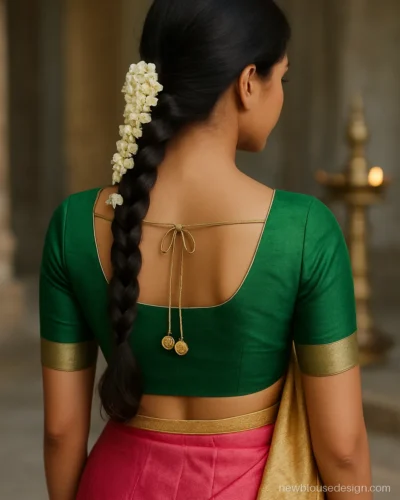
Sometimes the saree is so heavy the back should be calm. A small keyhole and potli buttons keep it elegant.
Tailor note: High round back, 4 inch keyhole, three potli buttons, no extra embroidery.
Reception and Bridal Lehenga Blouse Ideas
Reception looks are more modern. Think sweetheart necks, shimmer, and lighter sleeves. For more lehenga cuts see lehenga blouse designs.
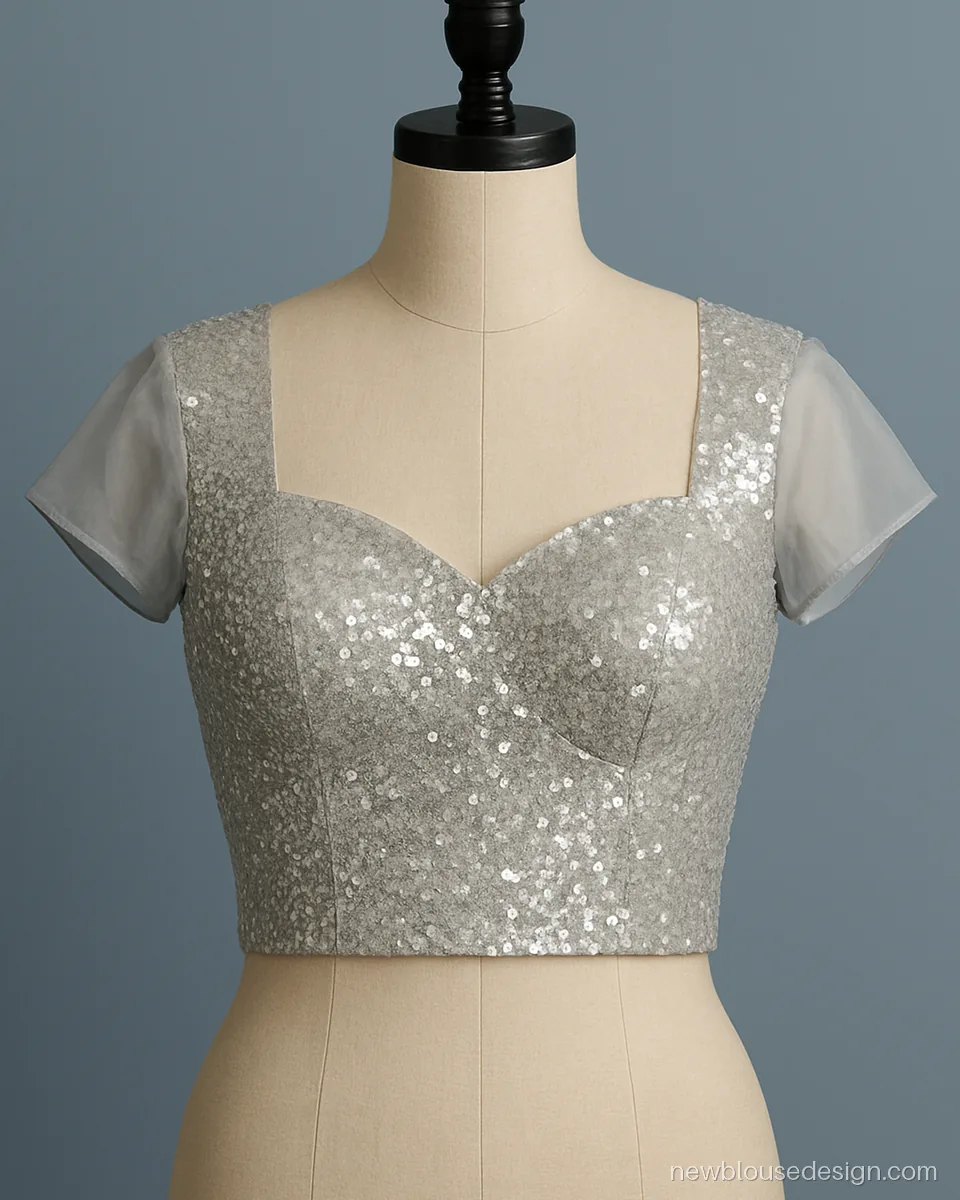
A sweetheart front in silver sequins for the reception night. Wear with a pastel or grey shimmer saree.
Tailor note: Padded sweetheart, skin tone lining, sheer cap sleeves, side zip.
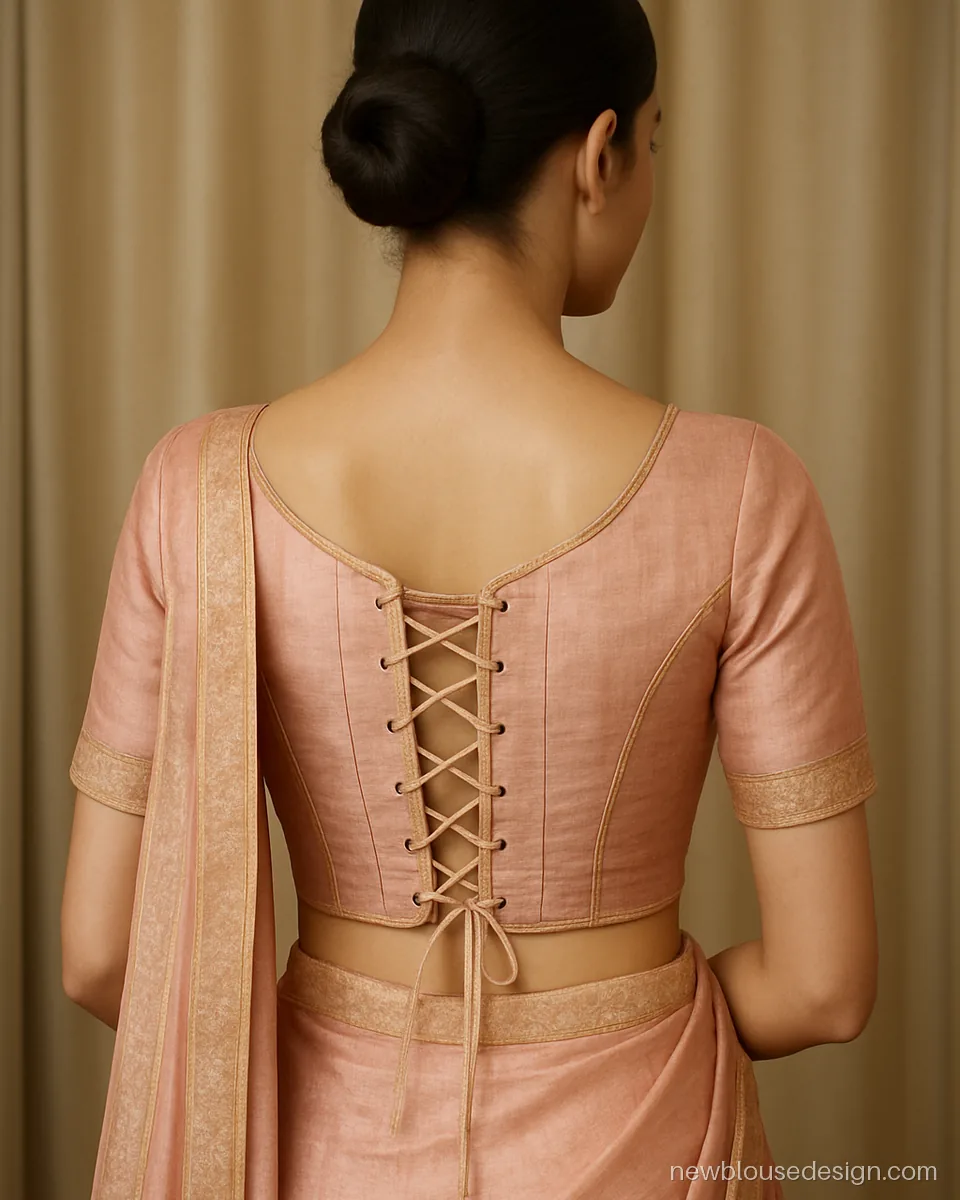
A corset back with a lace-up dori gives a firm, flattering fit under a heavy lehenga. Great for long dancing evenings.
Tailor note: Princess cut panels with boning, eyelets for lace up dori, modesty panel behind.
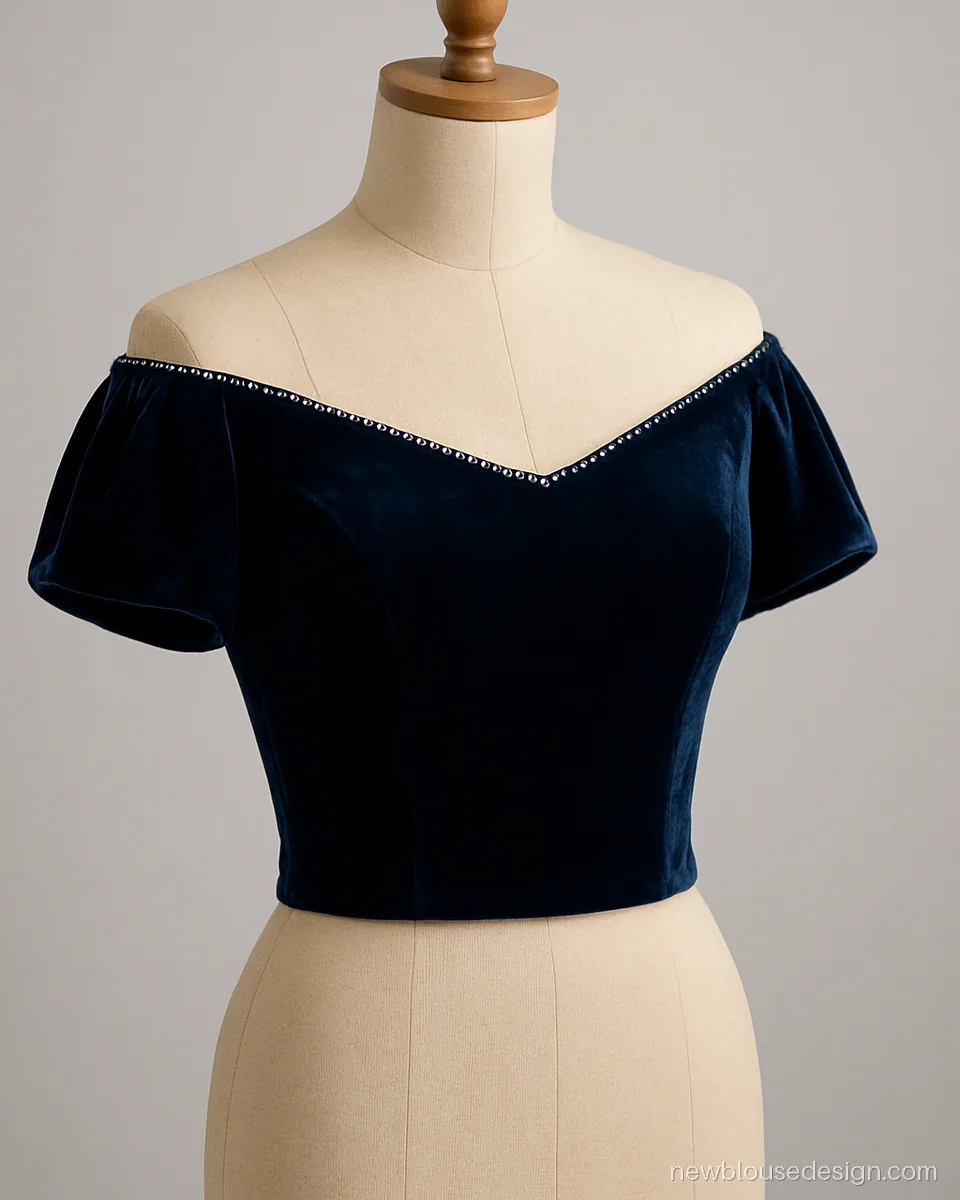
An off-shoulder line with crystals along the edge looks polished for evening photos. Good for brides who want a change from red.
Tailor note: Off-shoulder band with silicon grip inside, crystals hand-sewn, back zip.
Haldi Blouse Design and Mehndi Picks
Haldi and mehndi blouses should be bright, washable and easy to move in. Cotton, mul and light silk are perfect.
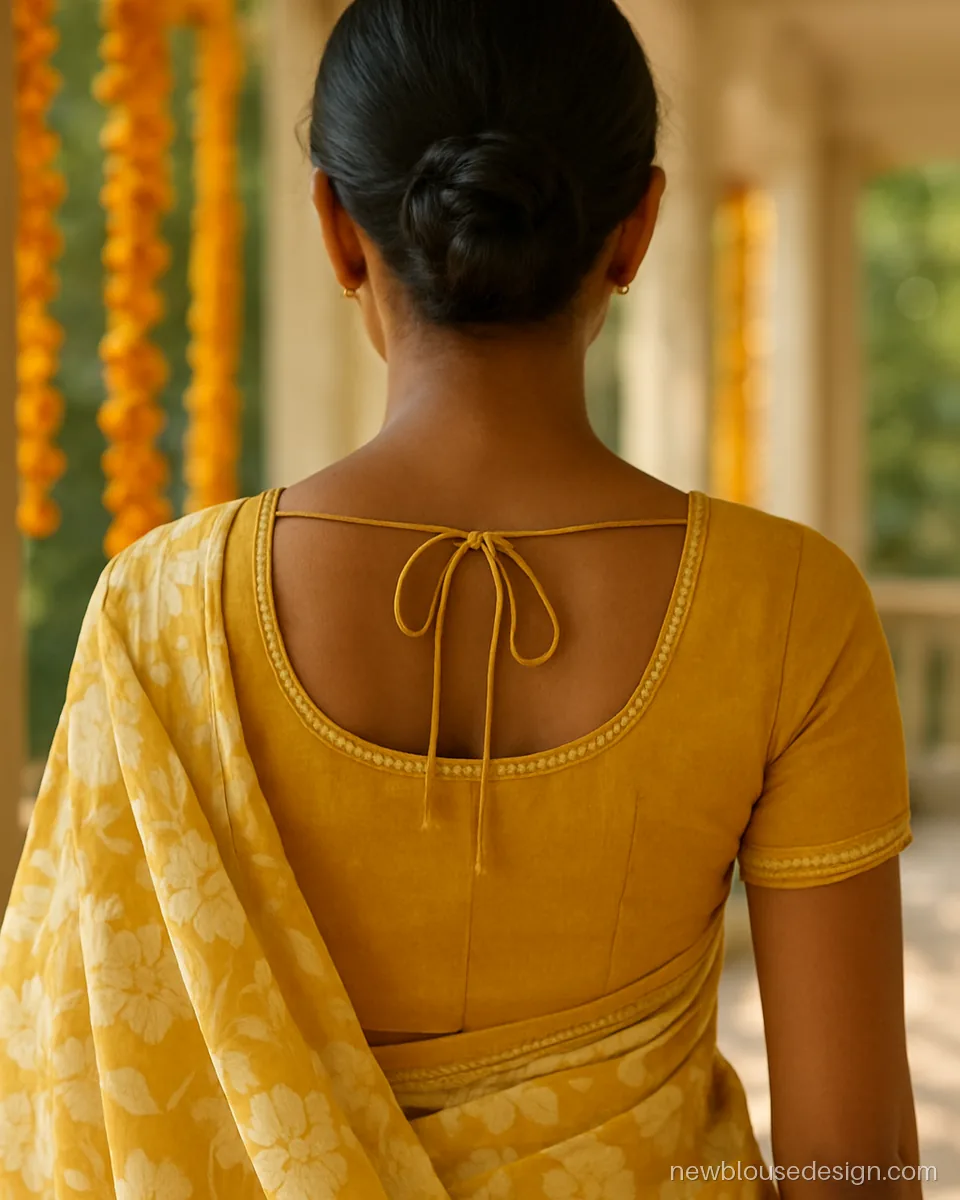
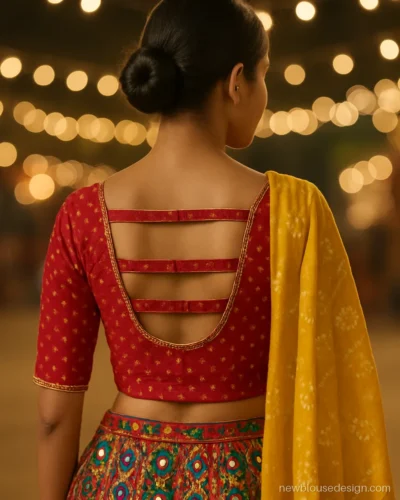
Yellow cotton with gota patti borders is fresh and easy to wash after the haldi. A simple tie back keeps it comfortable.
Tailor note: Round back with tie strings, gota on neck and sleeve hem, no padding.
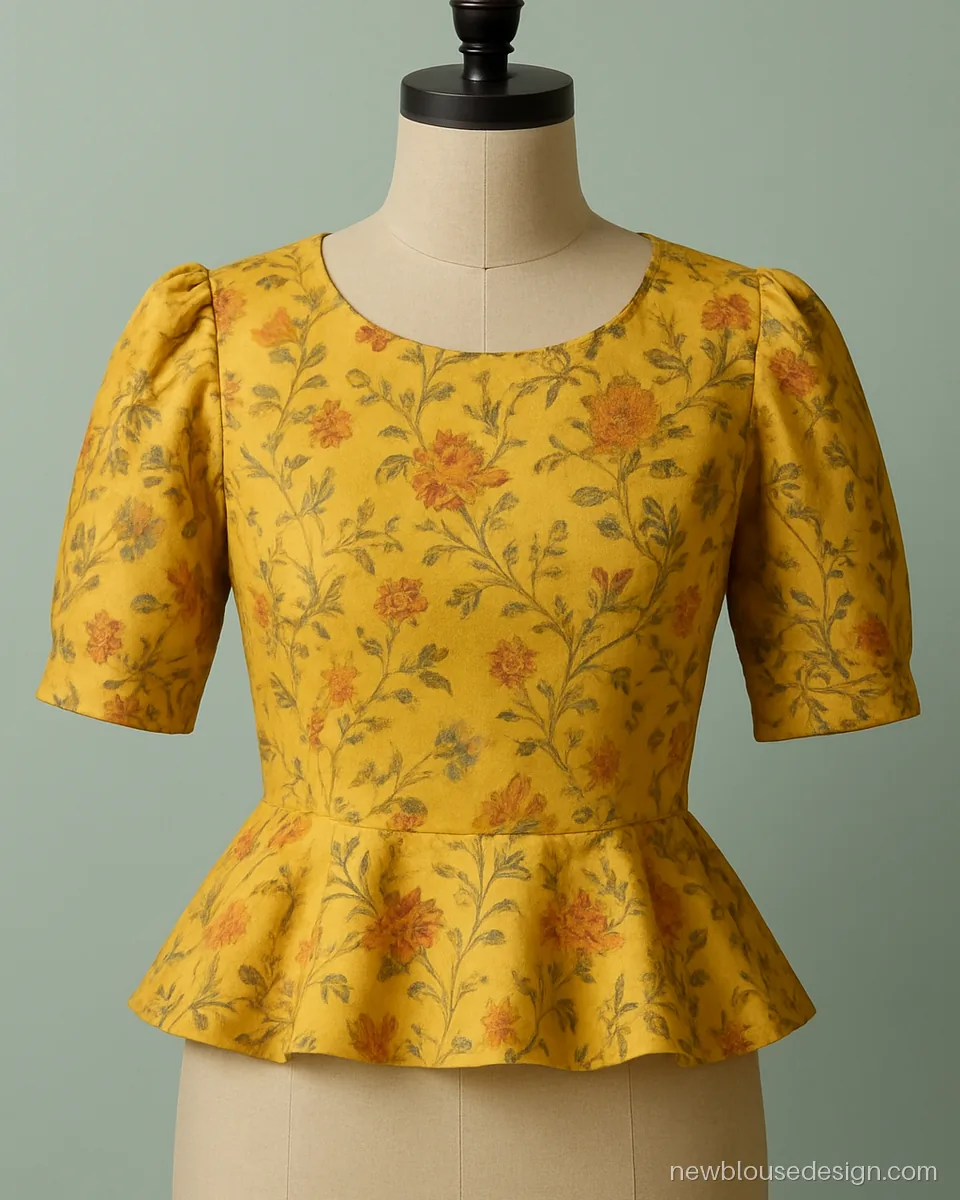
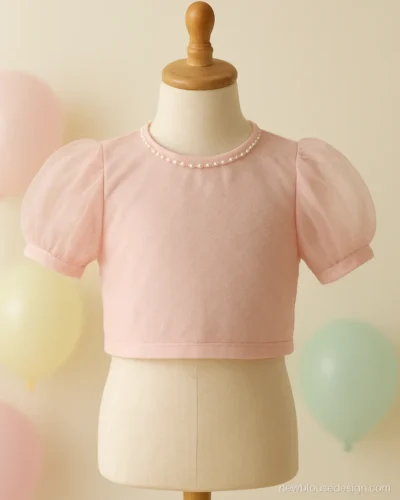
A short peplum and soft puffs look playful with a plain saree or lehenga skirt. Easy to wear again after the wedding.
Tailor note: Peplum 3 inches below waist, light puff at elbow sleeves, side zip.
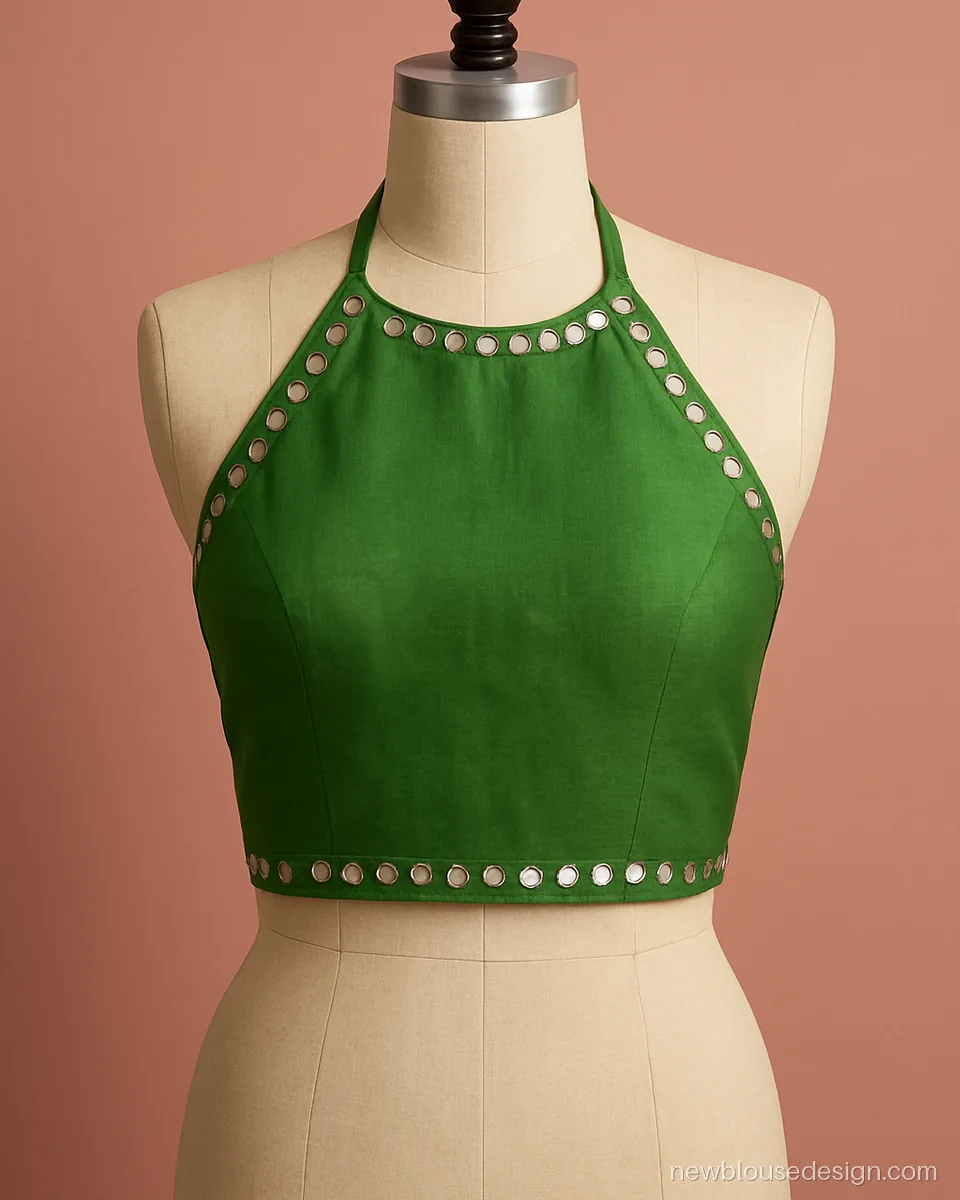
A halter neck with small mirrors is fun for the mehndi dance floor. Pair with a green and pink lehenga or bandhani saree.
Tailor note: Halter tie at neck, mirrors stitched with thread border, hooks at lower back.
Fitting Plan for a Bride
| When | What happens |
|---|---|
| 6 weeks before | Choose design, give measurements, mark embroidery |
| 3 weeks before | First trial in lining or calico |
| 10 days before | Final trial with embroidery done |
| 3 days before | Pick up, try with saree and jewellery |
Wear the same inner wear and heels at every trial.
Tips for a Heavy Wedding Blouse
- Ask for padding and a firm lining. A heavy pallu pulls the blouse down.
- For a blouse back design for wedding rituals, keep the neck at about 9 to 10 inches if you want deep. Add a dori so it stays.
- Leave about half an inch of ease. You will sit for long rituals.
- Pin the pallu at the shoulder seam, which should be strong.
- Keep a spare set of hooks and a safety pin kit with someone you trust.
Guests can find softer looks on our party wear blouse page.
Questions women ask
How deep should a bridal blouse back design be?
Most brides are happy with about 9 to 10 inches. Deeper backs need padding, a dori or a solid band. Think of how long you will sit and bend during the rituals.
What is a wedding husband name blouse design?
It is a blouse with the groom's name stitched on the back, often inside a scroll with a doli or couple scene. Give the tailor the name spelling in the script you want, in Hindi, Marathi or English, and approve a paper sketch first.
Which blouse design for bride suits a heavy silk saree?
Keep the cut classic, like a round, square or paan back with the saree border. The silk is already rich, so let the border and a few latkans do the work.
What is a good haldi blouse design?
Choose yellow or white cotton with gota, mirror or simple prints. Avoid silk because turmeric stains it. Tie backs and short sleeves are comfortable.
Can I wear a simple marriage blouse design?
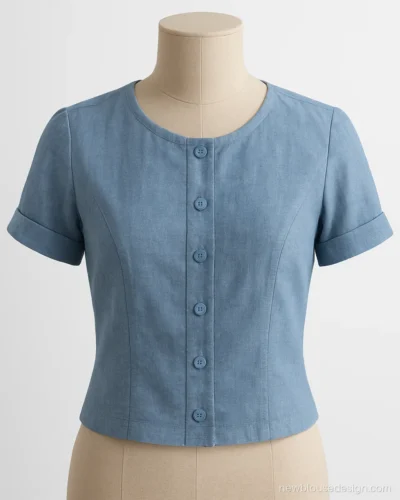
Yes. A high round back with buttons or a keyhole looks graceful, especially with a heavy Banarasi or Paithani saree. Simple does not mean plain if the fabric is rich.
Which sleeves are best for a bridal blouse?
Elbow length sleeves are the most popular. They photograph well and let you move. For winter weddings, full velvet or net sleeves are also lovely.