Bandhani Blouse Design Ideas for Bandhej and Leheriya Sarees
- 12 designs
- By saree type
- Updated Oct 2026
A bandhani blouse design carries the cheerful dots of Gujarat and Rajasthan tie-dye, where tiny knots are tied by hand and dipped in colour. Bandhani, also called bandhej, is worn at weddings, Navratri, Teej and every family celebration in between.
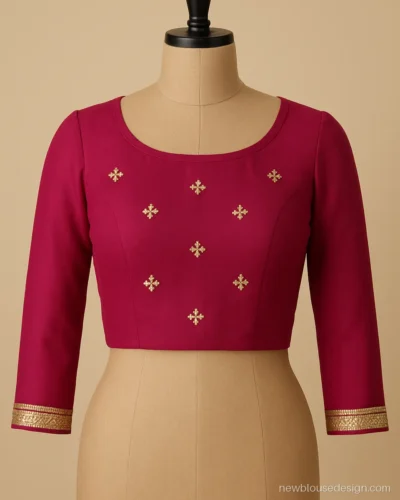
Because the saree is already full of pattern, the blouse has two good routes. You can match it with the same bandhani for a rich, all-over look, or go for a solid contrast in silk, velvet or gota so the dots stand out. Both look lovely. The key is to choose one hero, not three.
Here are 12 ideas, including leheriya, the wave-striped cousin of bandhani. You may also like our Rajasthani blouse design and mirror work blouse design pages.
Blouse Design for Bandhani Saree
Each bandhani saree blouse design in this group is cut from bandhani itself. Line them well, as many bandhani fabrics are thin georgette or soft silk.
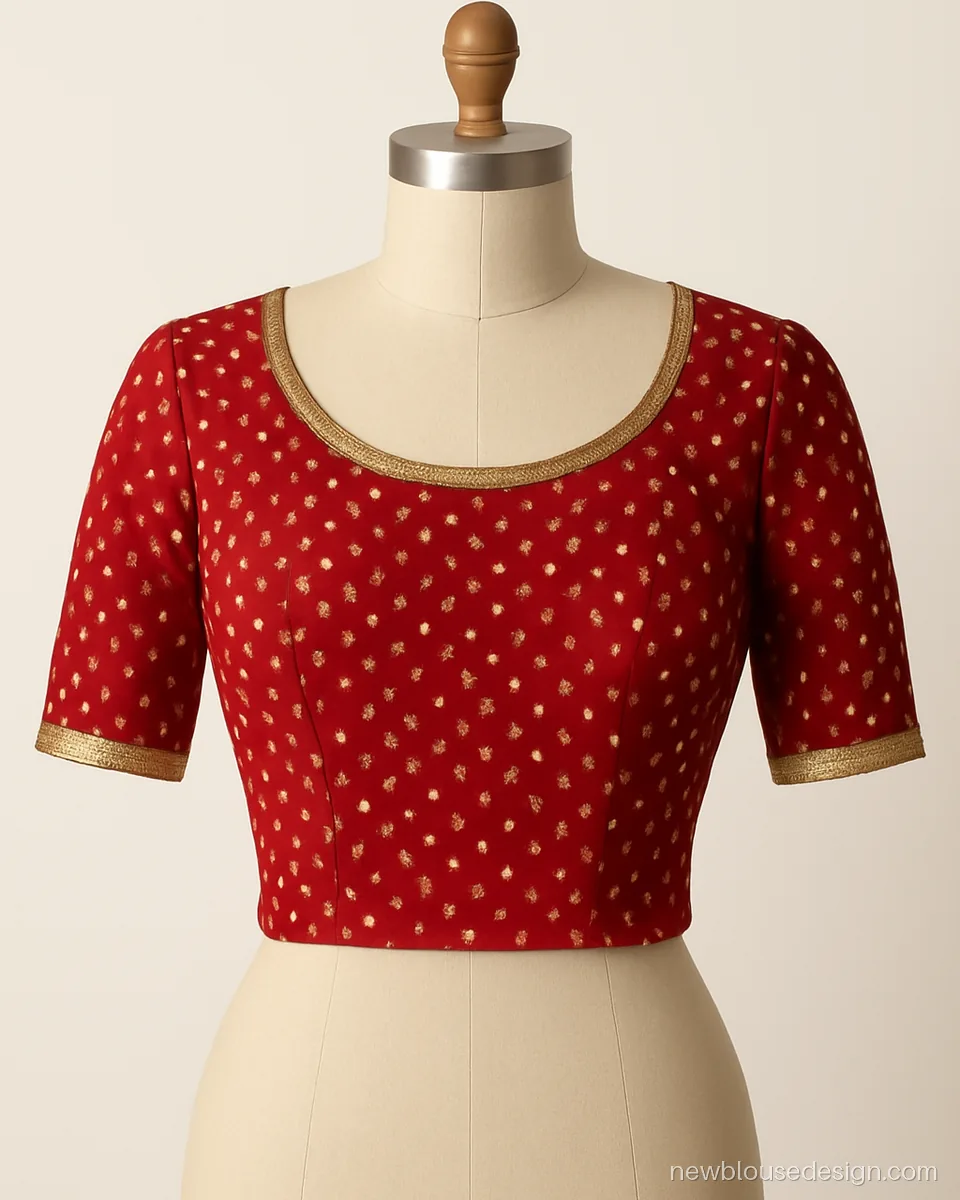
This bandhej blouse design in gaji silk with a gold gota border is the classic choice for a red bandhej saree at a wedding.
Tailor note: Round neck about 6 inches; gota border on neck and sleeve hem; cotton lining; front hooks.
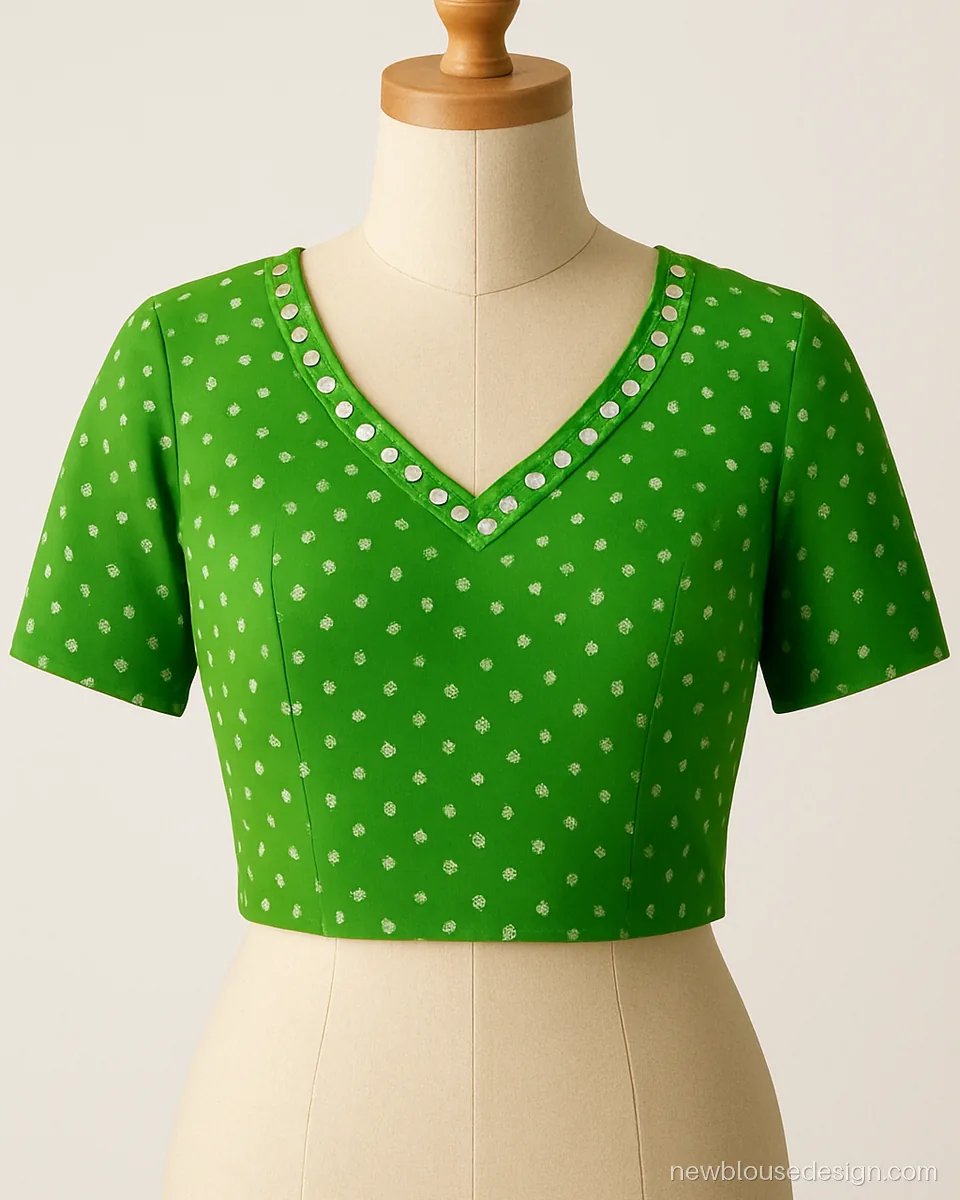
A green bandhani blouse design with tiny mirrors at the yoke adds sparkle without hiding the dots. Lovely for Teej and mehendi.
Tailor note: V neck about 7 inches; small round mirrors along the yoke; full lining in green cotton.
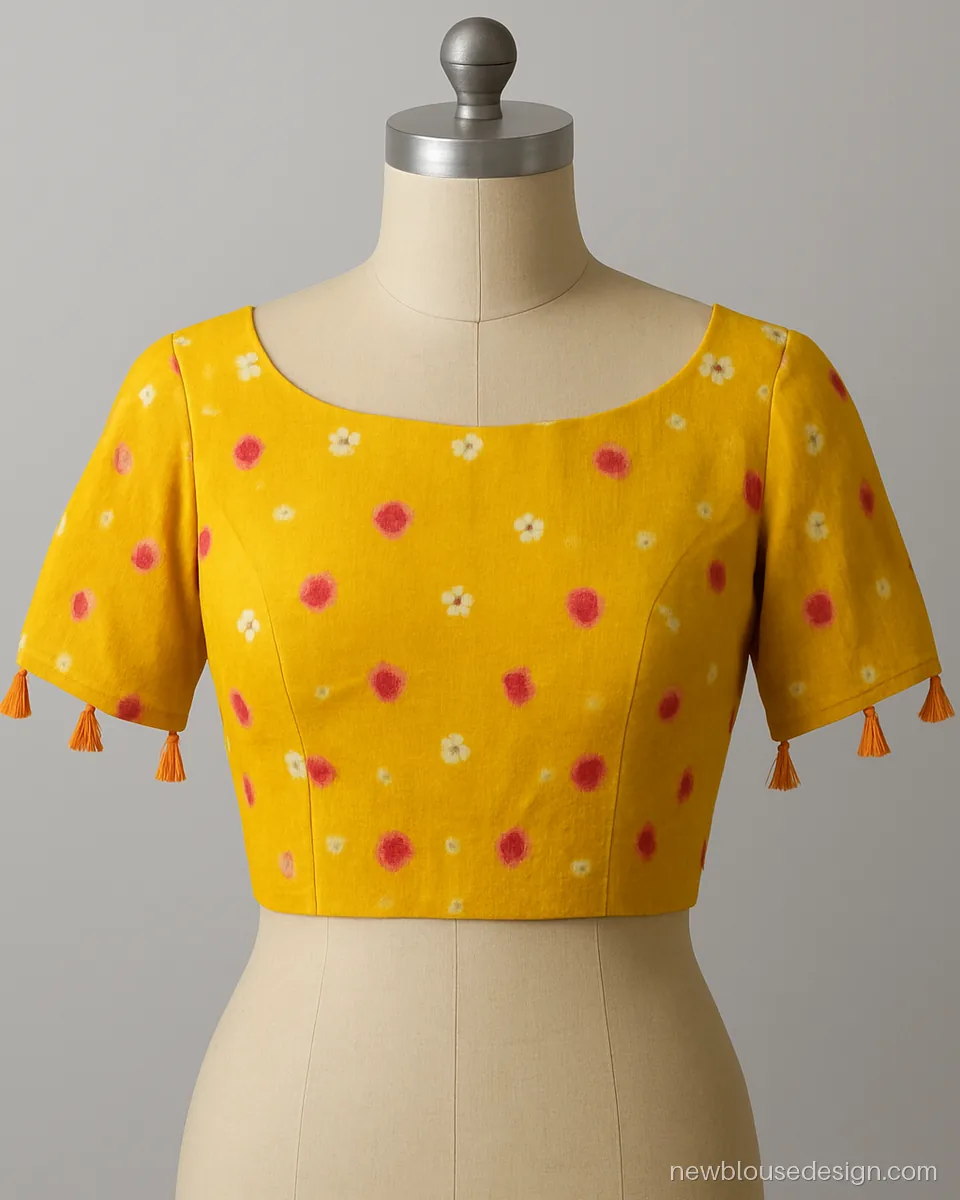
Cotton bandhani in bright yellow is light and easy for day functions. The boat neck keeps it simple for haldi.
Tailor note: Boat neck with side zip; orange cotton tassels on the sleeve hem; pre-wash, as colour may bleed.
Bandhani Blouse Back Design
The back is where a bandhani saree blouse back design can get playful. These latest bandhani blouse design back ideas use dori, gota and keyholes.
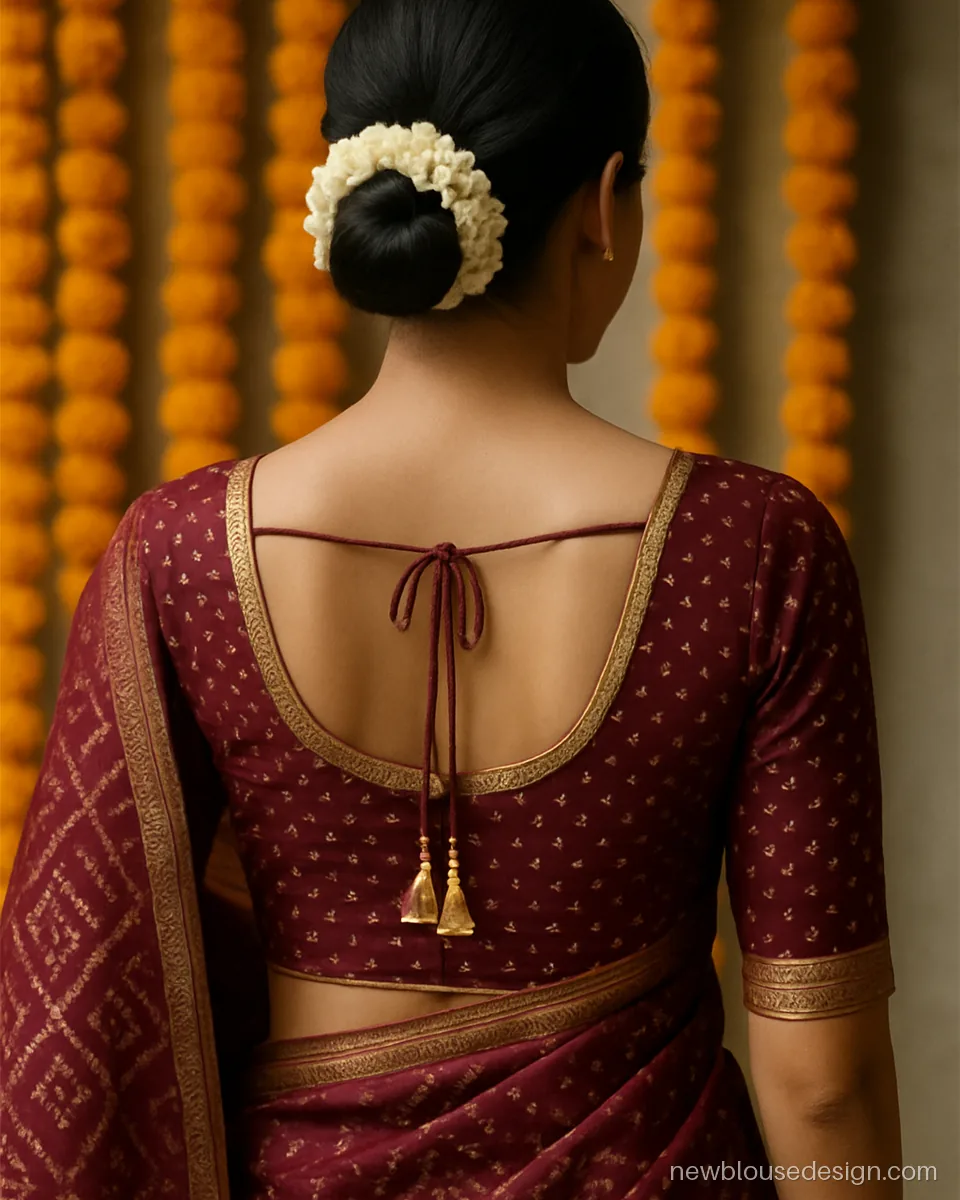
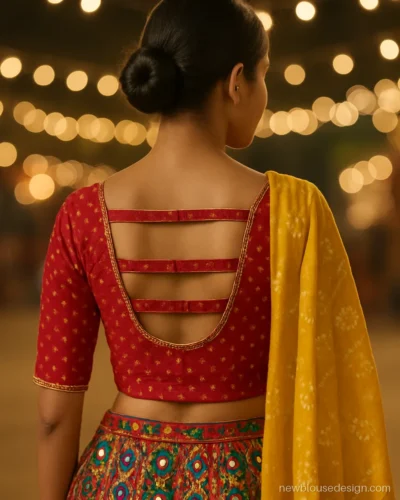
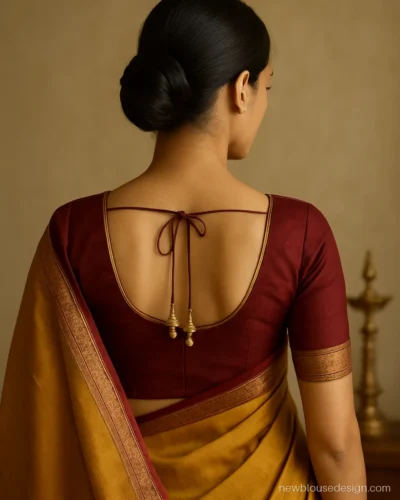
A deep U back edged with gota and finished with gota latkans looks fancy and festive. A great match for a maroon bandhej silk.
Tailor note: Deep U about 10 inches; gota edging; dori with gota latkans; padding and back lining.
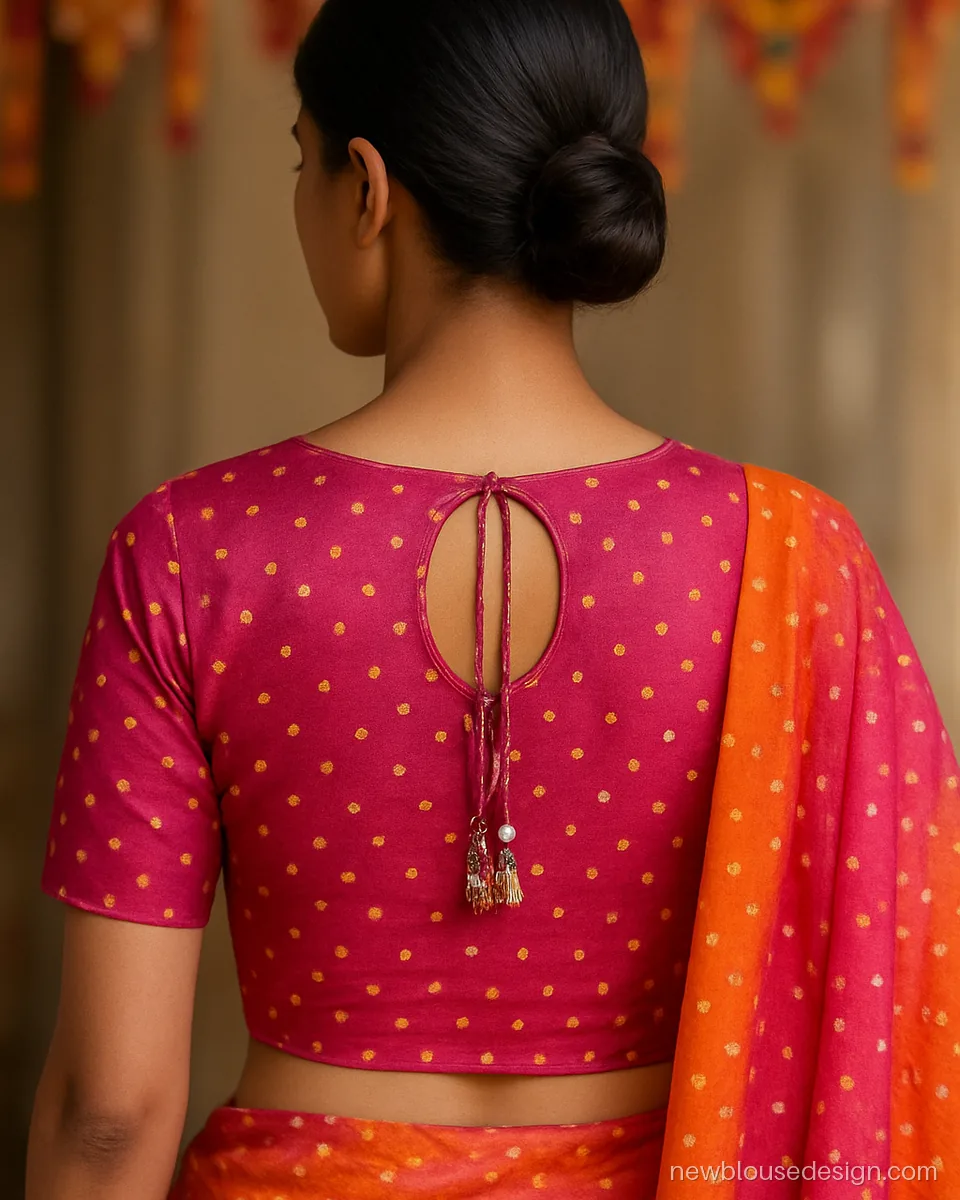
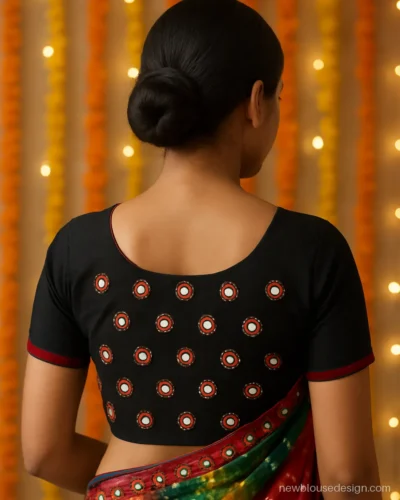
A small keyhole and a mirror-studded dori keep the back light for Navratri dancing. Pair with a pink and orange bandhani chaniya.
Tailor note: Round back about 7 inches with a 3 inch keyhole; mirror work dori; front hooks for easy wear.
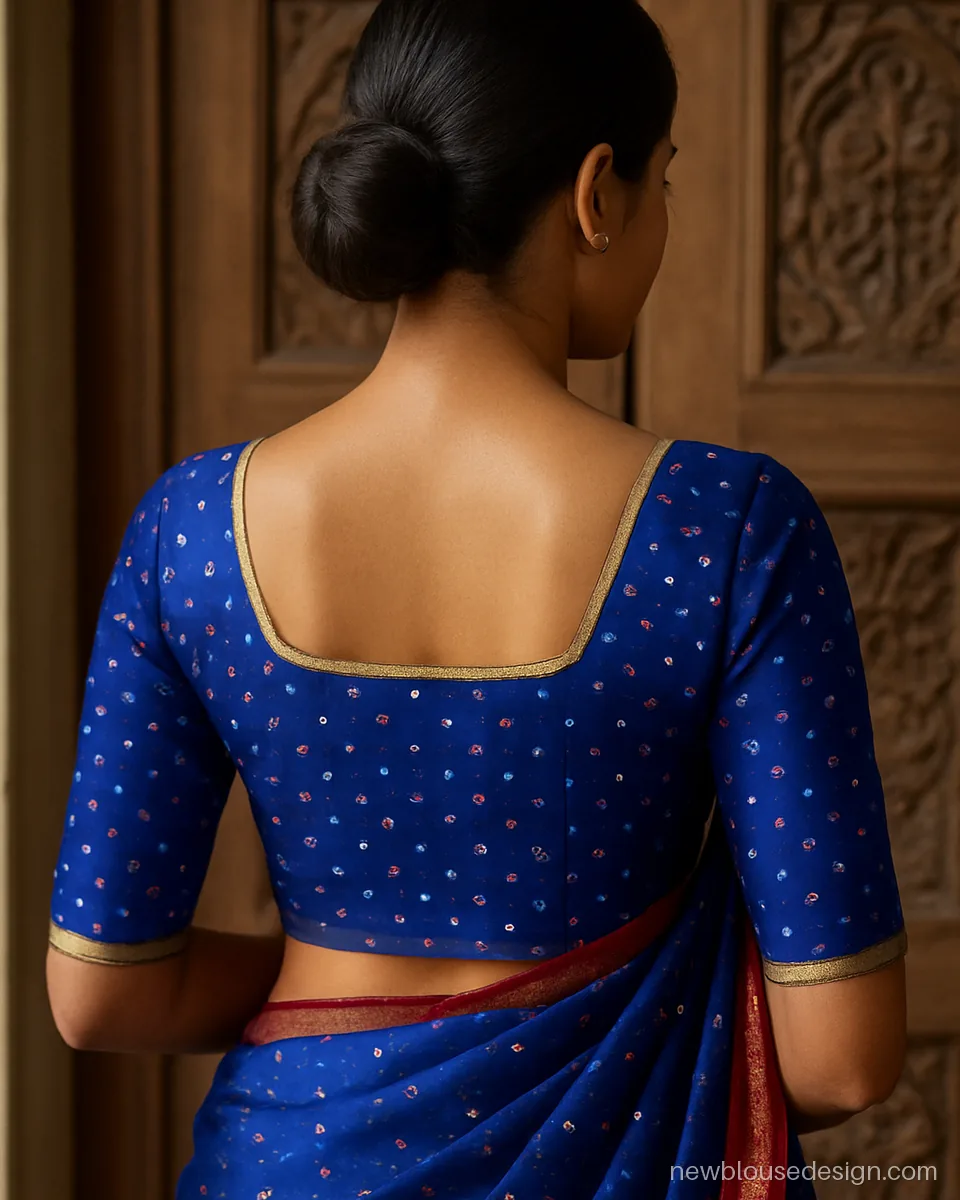
A neat square back with zari piping is a new bandhani blouse design that stays simple. It suits a royal blue bandhej saree.
Tailor note: Square back about 8 inches; gold zari piping on all edges; elbow sleeves; cotton lining.
Leheriya Saree Blouse Design
Leheriya has diagonal wave stripes made by rolling and tying the cloth. Match the stripes neatly at the seams for a clean finish.
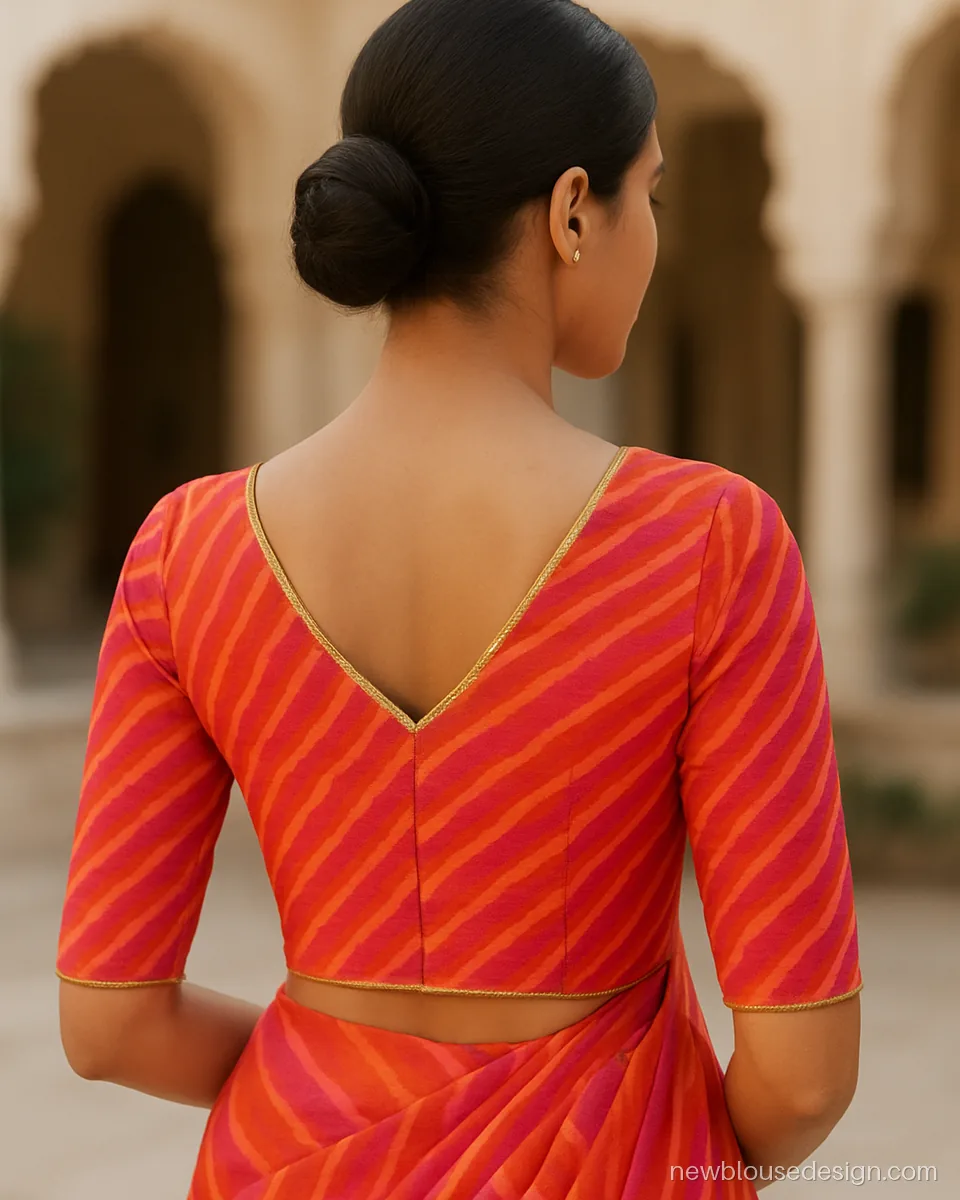
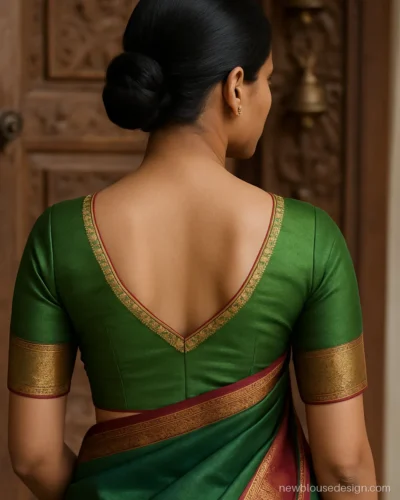
Matching leheriya stripes meeting in a V at the back look striking. A classic blouse for a Teej or monsoon function.
Tailor note: Match stripes at centre back; V about 8 inches; gota edge; full cotton lining.
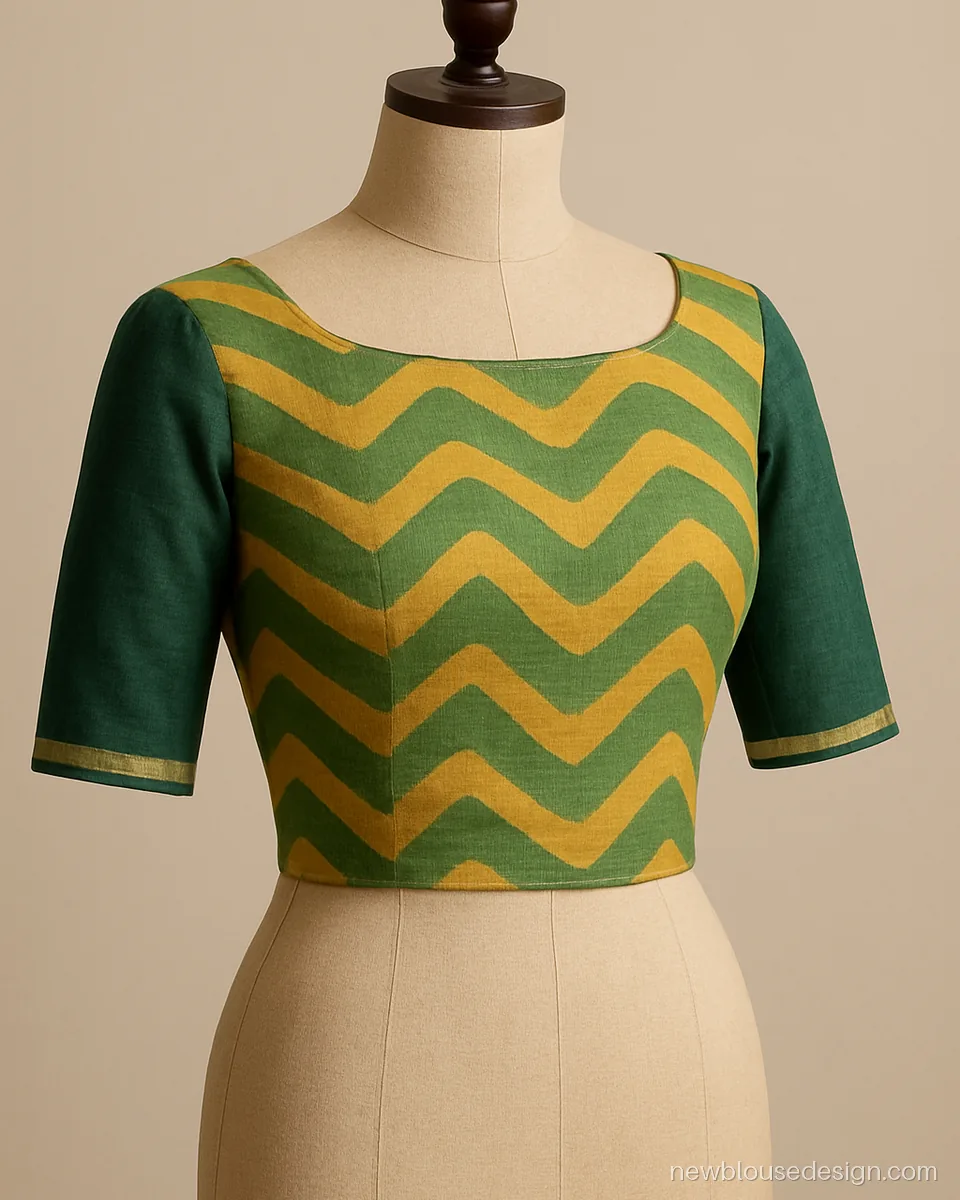
Solid green sleeves calm down the busy stripes. A smart blouse design for leheriya saree in green and yellow.
Tailor note: Body in leheriya, sleeves in plain green cotton; boat neck; side zip for a smooth front.
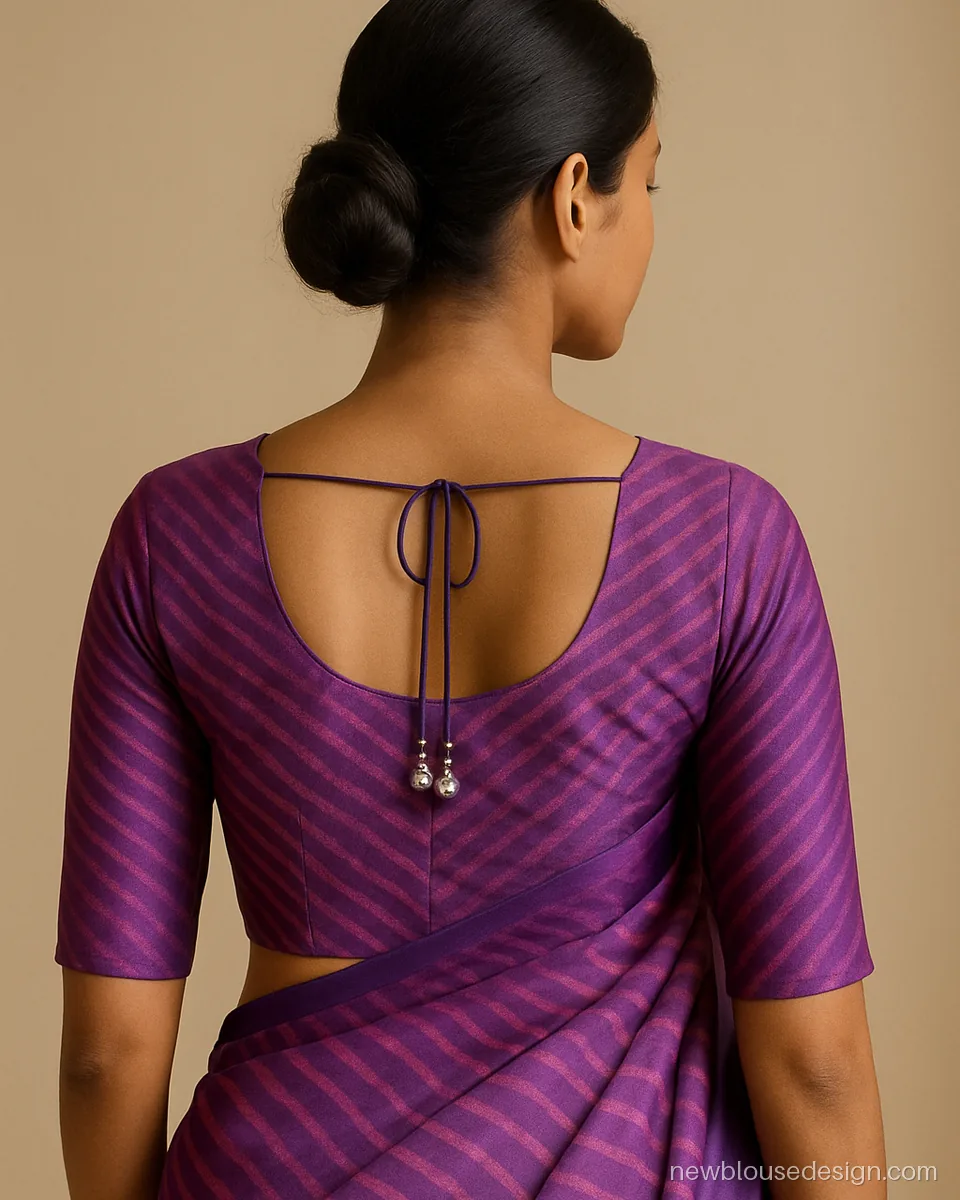
Purple leheriya with a round back and small silver latkans feels festive yet easy. Lovely with a purple and pink leheriya saree.
Tailor note: Round back about 8 inches; silver bead latkans on a thin dori; line in soft cotton.
Contrast Blouses and Bandhani Blouse Sleeves Design
A solid blouse lets the bandhani saree shine, while bandhani sleeves add a fun touch to a plain blouse.
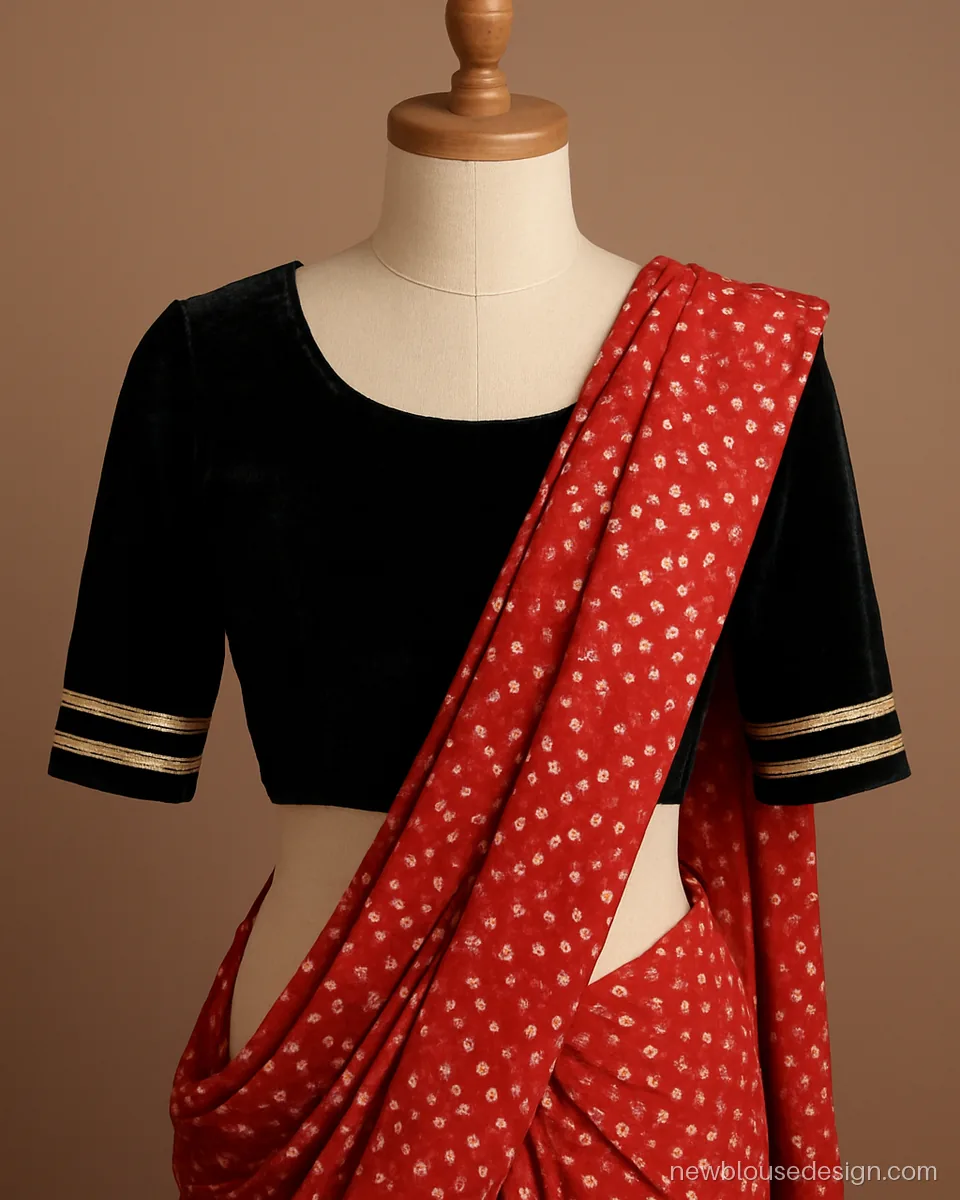
A black velvet blouse makes a red bandhej saree pop for winter weddings. The gota sleeves link the two.
Tailor note: Velvet body lined in cotton; gota bands on elbow sleeves; round neck; side zip.
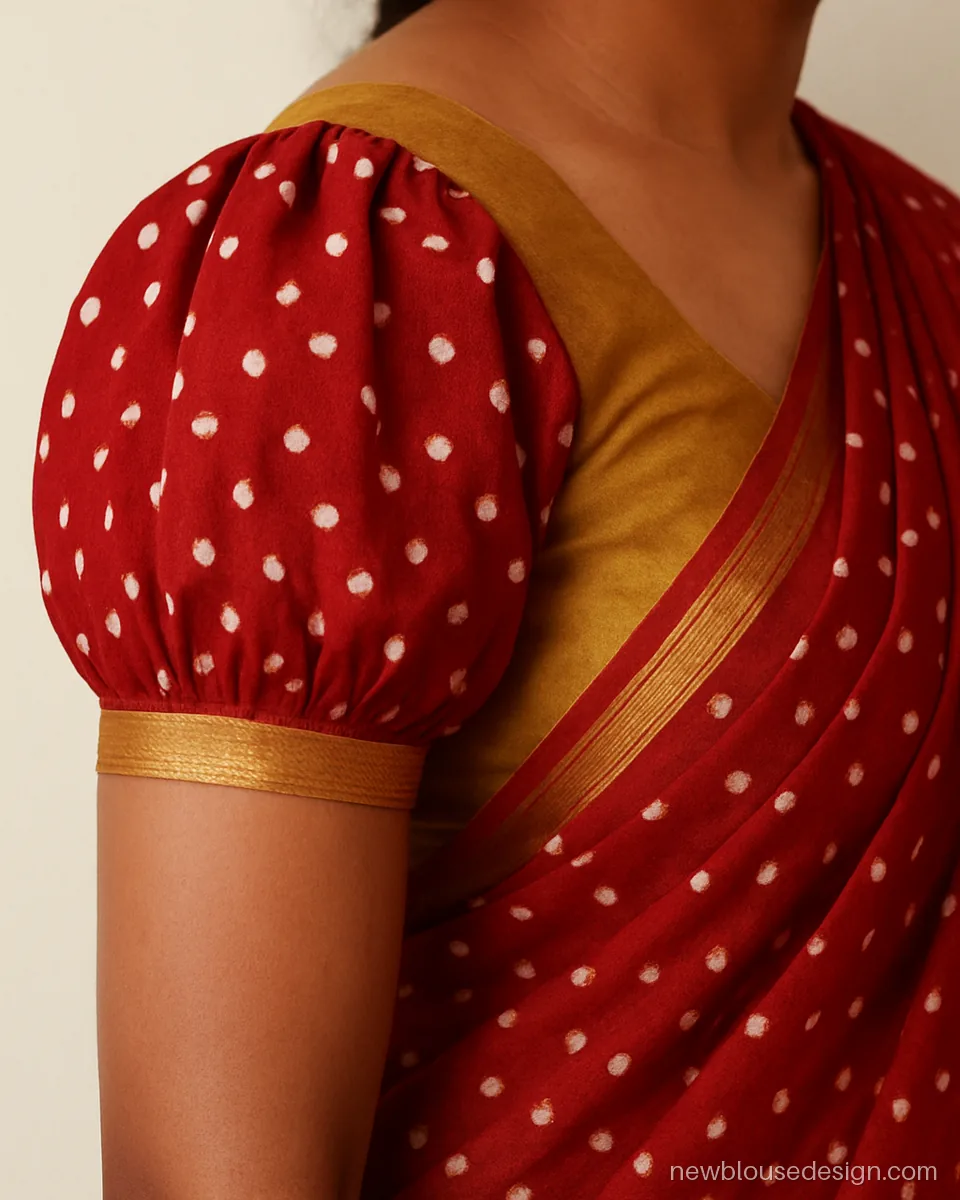
A plain mustard blouse with red bandhani puff sleeves is a playful bandhani blouse sleeves design. Use leftover saree fabric for the sleeves.
Tailor note: Body in mustard silk; sleeves cut from bandhani with a light puff and gota cuff.
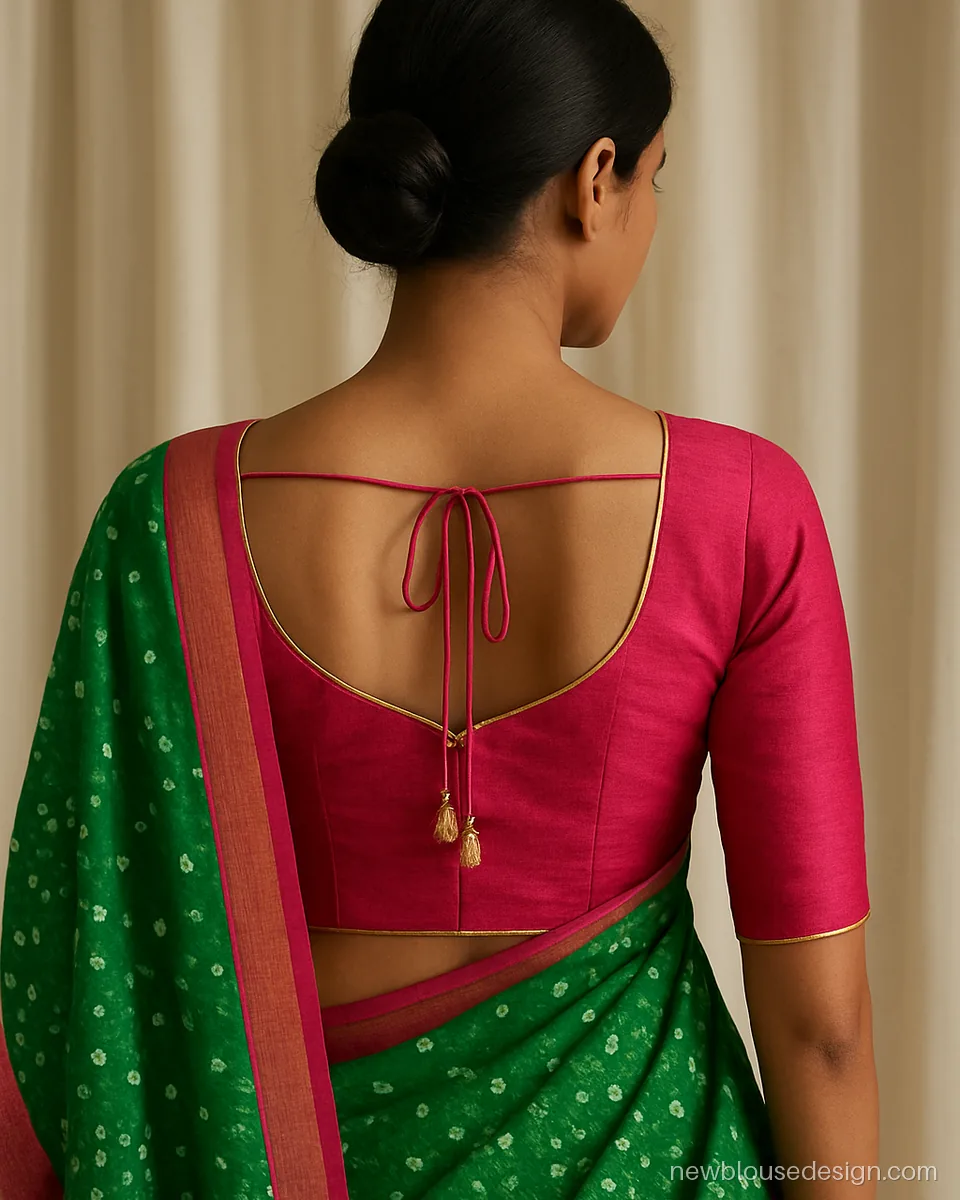
Hot pink raw silk against a green bandhani saree is a bright, traditional pairing. A fancy bandhani blouse design idea for sangeet nights.
Tailor note: Sweetheart shaped back about 9 inches; zari piping; dori with tassels; light padding.
Tips for a Bandhej Saree Blouse Design
- Check colour fastness: Bandhani dyes can bleed. Rinse the blouse piece in cold salt water before cutting.
- Plan the pattern: Place the biggest bandhani dots or motifs at the centre front and centre back. A good bandhani blouse design pattern is balanced on both sides.
- Lining: Georgette and chiffon bandhani need full cotton lining. Gaji silk needs it too, for comfort.
- Do not over-press: Iron on the reverse with a cloth on top so the dots keep their texture.
- Gota and mirror: Choose one, not both, so the look stays neat.
Bandhani Blouse Pairing Guide
| Saree | Blouse |
|---|---|
| Red bandhej silk | Matching red with gota, or black velvet |
| Green bandhani | Pink raw silk or self bandhani with mirrors |
| Leheriya chiffon | Self leheriya with gota V back |
| Cotton bandhani | Plain cotton boat neck or tassels |
| Multicolour Navratri | Black or white with mirror dori |
For more festive looks, see our Navratri blouse design page.
Questions women ask
Which blouse design bandhani saree looks best with?
A matching bandhani blouse with gota works for weddings, and a solid contrast blouse in silk or velvet works for parties. Choose round, V or square backs that do not fight with the dots.
What is the latest bandhani blouse design back idea?
Deep U or keyhole backs with gota latkans and mirror dori are popular right now. A square back with zari piping is a simpler option.
Should the blouse match the bandhani saree?
It can, but it does not have to. A matching blouse looks rich and traditional. A plain contrast blouse in pink, black or mustard makes the saree stand out more.
Which sleeves suit a bandhani blouse?
Elbow sleeves with gota, puff sleeves in bandhani, or short sleeves with tassels all work. For Navratri, mirror work on sleeves adds sparkle. See our blouse sleeves design page.
What is the difference between bandhani and leheriya?
Bandhani has small dots made by tying tiny knots before dyeing. Leheriya has diagonal wave stripes made by rolling and tying the cloth. Both come from Rajasthan and Gujarat.